

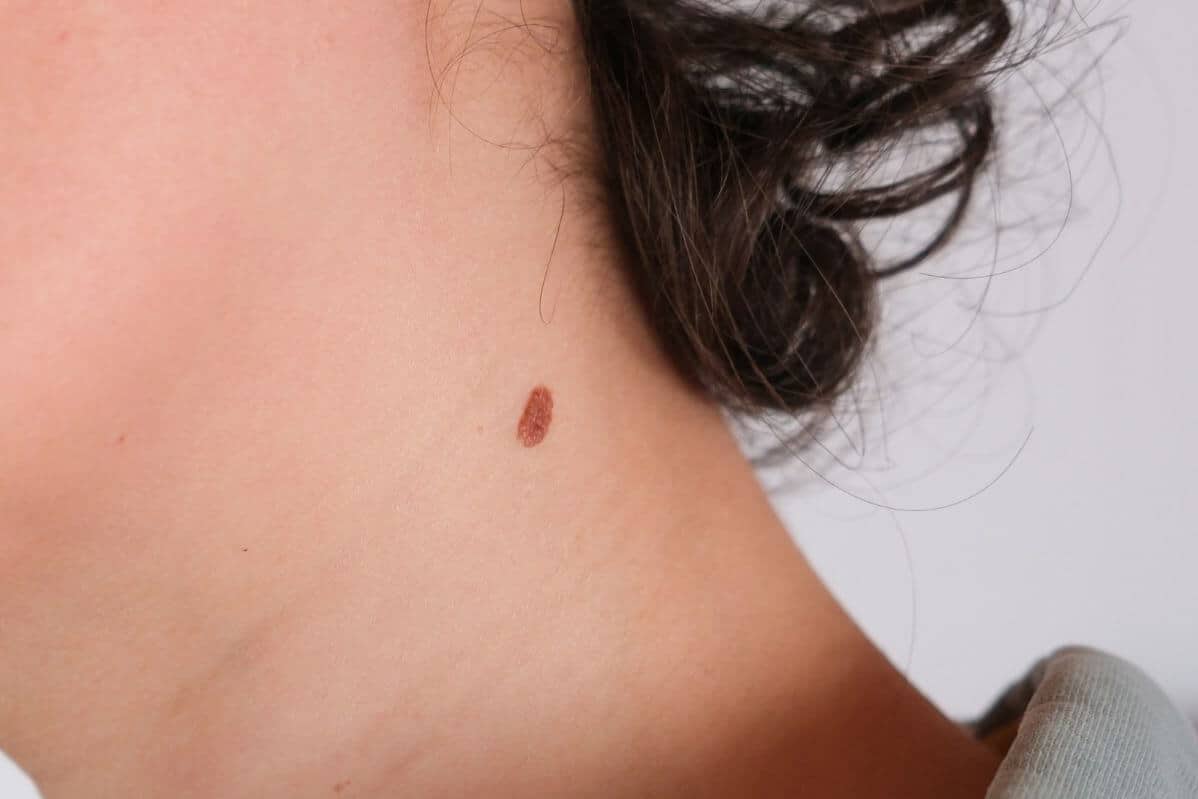
Is There a Minimum Age for Mole Removal?
No universal minimum age applies to mole removal. Children, teenagers, and adults can all undergo assessment and treatment when clinically appropriate.
The decision is based on the mole’s appearance, behaviour, location and symptoms, rather than age alone. Most moles in younger people are harmless and do not require removal, but a new, changing or symptomatic lesion should be assessed promptly even in children.
Key Takeaways
- There is no fixed minimum age for mole removal; treatment depends on the mole and the clinical concern.
- Most moles in children and teenagers are harmless and may only require monitoring.
- A changing, symptomatic, unusual or repeatedly irritated mole should be assessed.
- Removal may be advised for diagnosis, practical reasons or carefully considered cosmetic concerns.
Moles in Children and Teenagers
Moles may be present at birth or develop during childhood and adolescence. It’s common for new moles to appear in younger people, and some existing moles may become slightly darker or larger as the body grows.
Why Regular Observation Is Helpful
Parents and young people should become familiar with the appearance of their skin and existing moles. This makes it easier to identify a lesion that changes over time or looks different from the surrounding moles.
A stable mole with an even colour, regular outline, and no symptoms often requires no treatment. Monitoring may be the most appropriate approach where there is no clinical concern.
When Might Mole Removal Be Recommended?
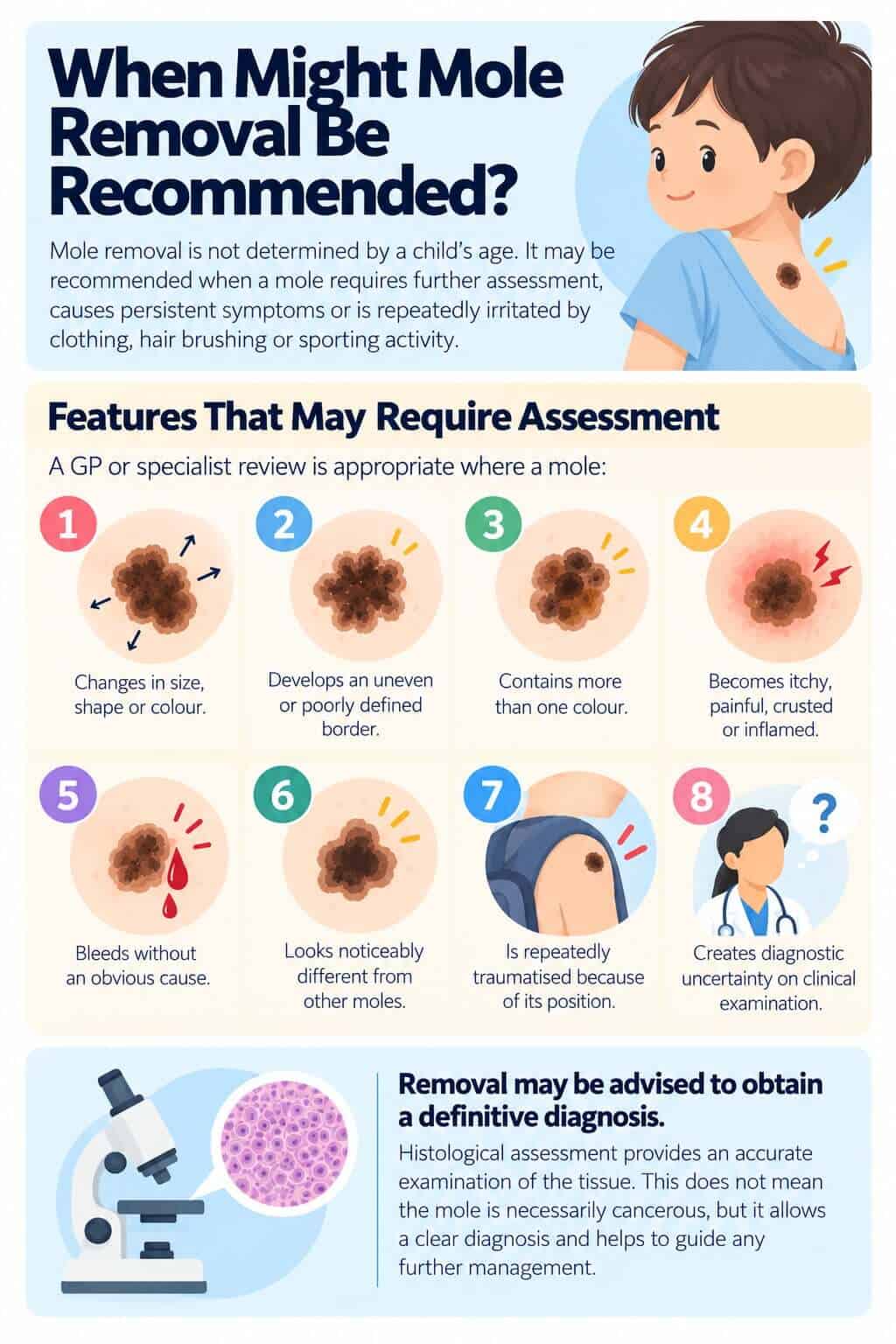
Mole removal is not determined by a child’s age. It may be recommended when a mole requires further assessment, causes persistent symptoms or is repeatedly irritated by clothing, hair brushing or sporting activity.
Features That May Require Assessment
A GP or specialist review is appropriate where a mole:
- Changes in size, shape or colour
- Develops an uneven or poorly defined border
- Contains more than one colour
- Becomes itchy, painful, crusted or inflamed
- Bleeds without an obvious cause
- Looks noticeably different from other moles
- Is repeatedly traumatised because of its position
- Creates diagnostic uncertainty on clinical examination
Removal may be advised to obtain a definitive diagnosis through histological assessment. This does not mean the mole is necessarily cancerous, but it allows accurate tissue examination.
Signs of Skin Cancer in a Mole
Melanoma is an uncommon form of skin cancer in children, but any concerning lesion should be assessed without delay. A mole that changes progressively, develops symptoms or appears unusual should not be assumed to represent normal growth.
Using the ABCDE Approach
The ABCDE framework can help parents and young people recognise features that warrant clinical review:
- A, Asymmetry: one half of the mole differs from the other
- B, Border: the edge appears irregular or uneven
- C, Colour: different shades of brown, black, red, blue or white are present
- D, Diameter: the lesion is increasing in size
- E, Evolving: the mole changes in appearance or develops symptoms
The ABCDE approach is not a diagnostic tool. A clinician should assess any lesion that is changing, bleeding, itchy, crusted or persistently unusual.
Cosmetic Mole Removal in Younger Patients
A harmless mole may be removed for cosmetic reasons, particularly where it causes ongoing self-consciousness or repeated practical irritation. However, the benefits of mole excision must be balanced against the fact that surgical treatment creates a permanent scar.
Timing Is Considered Carefully
Where a benign mole is stable and does not cause symptoms, it may be appropriate to defer cosmetic removal until a young person is older. This allows treatment to be planned with greater involvement from the patient and with a clear understanding of the expected outcome.
For lesions on the face, scalp or neck, careful planning is particularly important. The location of the mole, natural skin creases and tension on the wound all influence scar placement and healing.
How Mole Removal Is Planned
Assessment begins with a detailed examination of the mole, including its size, colour, border, elevation and location. The clinician will also ask when the mole first appeared, whether it has changed and whether there is any relevant personal or family history.
Selecting the Most Appropriate Technique
The removal method depends on the characteristics of the lesion and the area being treated. Some small lesions can be removed under local anaesthetic, particularly in older children and teenagers who are comfortable with the procedure.
Younger children, anxious patients or those requiring more extensive surgery may require sedation or general anaesthesia. The anaesthetic approach is chosen individually, with safety, comfort and the complexity of treatment in mind.
Where a mole is removed because it is clinically suspicious, it may be sent for histology. This laboratory examination provides a definitive diagnosis and determines whether any further treatment is required.
Mole Removal With Mr Jonathan Dunne
Mr Jonathan Dunne is a London-based consultant plastic surgeon with specialist expertise and training in skin cancer surgery, Mohs surgery and reconstructive procedures. He assesses each lesion individually and advises whether observation, biopsy or surgical removal is the most appropriate next step.
An Individualised Approach for Younger Patients
For children and teenagers, Mr Dunne considers the mole’s clinical features, if there is an indication for removal, its location, the patient’s age, and the most suitable anaesthetic option. Discussions involve parents and, where appropriate, the young person, ensuring that the treatment plan is clearly understood.
When excision is required, careful attention is given to lesion removal, wound closure, functional preservation and scar placement. This is especially important in visible or anatomically complex areas.
Seek Advice for a Changing Mole
There is no fixed minimum age for mole removal but it is done where there is a clinical need in young people. A mole can be assessed and, where appropriate, removed at any age when there is a clinical reason to do so. If a mole is changing, symptomatic, unusual or repeatedly irritated, a consultation with Mr Jonathan Dunne can establish whether monitoring, biopsy or removal is appropriate.


