


When Does Insurance Cover Blepharoplasty?
Blepharoplasty, or eyelid surgery, is often associated with cosmetic improvements, but it can also address functional problems caused by excess eyelid skin. When drooping eyelids interfere with vision, patients may wonder whether private health insurance will cover the procedure. Insurance coverage depends on medical necessity, individual policy terms and the insurer’s assessment.
Understanding these requirements can help patients determine whether treatment may be eligible for funding and what steps to take before surgery.
Key Takeaways
Blepharoplasty may qualify for insurance coverage when excess upper eyelid skin causes a significant functional problem, such as obstructed vision.
- Cosmetic eyelid surgery is generally excluded from private health insurance policies.
- Medical assessments, photographs and visual field tests may be requested to support a claim.
- Lower blepharoplasty performed to improve under-eye bags or appearance is usually considered cosmetic.
- Medical necessity does not guarantee approval, so patients should confirm their policy terms and obtain authorisation before treatment.
When Is Blepharoplasty Covered by Insurance?
Private health insurance may cover blepharoplasty when the procedure is medically necessary rather than purely cosmetic. This is most relevant when excess upper eyelid skin obstructs vision or significantly interferes with everyday activities.
An upper blepharoplasty removes excess skin from the upper eyelids and may involve adjusting underlying fatty tissue. Although the procedure can improve eyelid appearance, it may also address functional difficulties caused by severe hooding.
The British Association of Aesthetic Plastic Surgeons (BAAPS) explains that certain functional procedures, including upper eyelid blepharoplasty for significant hooding that obstructs vision, may qualify for medical insurance coverage.
However, not every medically necessary procedure is covered by every insurer. Some policies exclude blepharoplasty or apply specific eligibility requirements, even when functional concerns are present.
Patients should therefore check their policy before assuming that surgery will be funded.
What Medical Conditions May Qualify for Blepharoplasty Coverage?
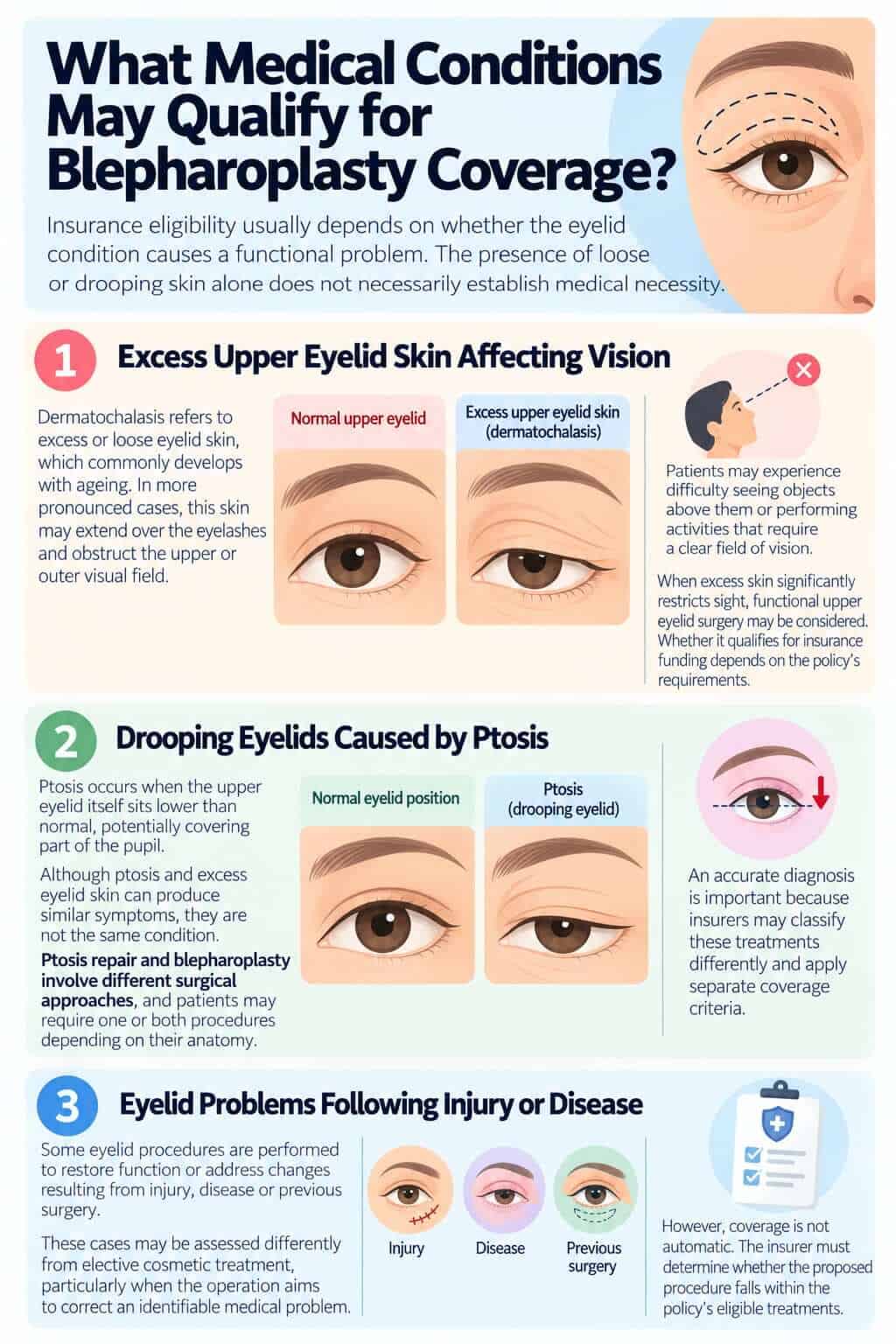
Insurance eligibility usually depends on whether the eyelid condition causes a functional problem. The presence of loose or drooping skin alone does not necessarily establish medical necessity.
Excess Upper Eyelid Skin Affecting Vision
Dermatochalasis refers to excess or loose eyelid skin, which commonly develops with ageing. In more pronounced cases, this skin may extend over the eyelashes and obstruct the upper or outer visual field.
Patients may experience difficulty seeing objects above them or performing activities that require a clear field of vision.
When excess skin significantly restricts sight, functional upper eyelid surgery may be considered. Whether it qualifies for insurance funding depends on the policy’s requirements.
Drooping Eyelids Caused by Ptosis
Ptosis occurs when the upper eyelid itself sits lower than normal, potentially covering part of the pupil.
Although ptosis and excess eyelid skin can produce similar symptoms, they are not the same condition. Ptosis repair and blepharoplasty involve different surgical approaches, and patients may require one or both procedures depending on their anatomy.
An accurate diagnosis is important because insurers may classify these treatments differently and apply separate coverage criteria.
Eyelid Problems Following Injury or Disease
Some eyelid procedures are performed to restore function or address changes resulting from injury, disease or previous surgery.
These cases may be assessed differently from elective cosmetic treatment, particularly when the operation aims to correct an identifiable medical problem.
However, coverage is not automatic. The insurer must determine whether the proposed procedure falls within the policy’s eligible treatments.
How Do Insurance Providers Determine Medical Necessity?
Insurance providers may require clinical evidence showing that surgery is necessary to address a functional problem rather than improve appearance alone.
The specific requirements differ between insurers, but supporting information may include:
- Clinical assessment: An examination of eyelid position, excess skin and any associated visual difficulties.
- Medical photographs: Images documenting the extent of eyelid hooding or drooping.
- Visual field testing: An assessment of whether the eyelids obstruct part of the patient’s field of vision.
- Specialist report: An explanation of the diagnosis, symptoms and recommended treatment.
The American Society of Plastic Surgeons (ASPS) explains that insurance coverage for eyelid surgery may be available when surgery addresses excess skin covering the eyelashes. However, this guidance is US-based, and UK patients must follow their own insurer’s criteria.
For patients experiencing visual obstruction, a specialist assessment helps establish whether the symptoms are caused by excess skin, true eyelid ptosis or another condition.
As a consultant plastic surgeon specialising in facial aesthetic and reconstructive surgery, Dr Jonathan Dunne assesses eyelid anatomy and function when planning treatment. This helps patients understand their concerns and whether further functional assessment is appropriate.
Does Insurance Cover Cosmetic Blepharoplasty?
Cosmetic blepharoplasty is generally not covered by private health insurance. Procedures performed primarily to improve the appearance of the eyelids are usually considered elective.
Common cosmetic concerns include under-eye bags, puffiness, loose skin and changes in eyelid contour associated with ageing.
Lower blepharoplasty, for example, commonly involves removing or repositioning fat beneath the eyes to create a smoother transition between the eyelid and cheek.
While this can improve appearance, it does not necessarily address a medical condition that qualifies for insurance funding.
Some patients may seek eyelid surgery for both functional and cosmetic reasons. In these situations, insurers may assess which parts of the proposed treatment are medically necessary, although policies vary and some may exclude the entire procedure.
The distinction between functional and cosmetic treatment is therefore important when discussing coverage.
Can Blepharoplasty Be Funded Through the NHS?
NHS-funded blepharoplasty is different from private medical insurance coverage. The NHS generally does not provide eyelid surgery solely to improve appearance.
However, functional eyelid surgery may be considered when there is a significant medical indication, such as excess upper eyelid skin affecting vision.
Eligibility depends on clinical findings and the relevant local NHS funding criteria. Patients may need a GP referral and specialist assessment before funding can be considered.
Those seeking surgery primarily for cosmetic reasons will usually need to arrange private treatment.
Patients should also be aware that qualifying for an NHS assessment does not mean that surgery will necessarily be approved.
What Should Patients Check Before Making an Insurance Claim?
Patients considering an insurance claim should review their policy and contact their provider before arranging surgery.
Important questions include whether functional blepharoplasty is covered, what documentation is required and whether the insurer needs to approve the procedure in advance.
Some policies exclude conditions that existed before coverage began or restrict treatment to particular hospitals and specialists.
Patients should also check whether consultations, diagnostic investigations, anaesthesia and postoperative care are included. Even when surgery is approved, excess payments or other out-of-pocket expenses may apply.
For patients who need to fund the procedure privately, understanding blepharoplasty recovery can also help with planning time away from work and arranging support after surgery.
Obtaining written confirmation of coverage before treatment can help prevent misunderstandings about which expenses the insurer will pay.
Making an Informed Decision About Blepharoplasty Coverage
Whether insurance covers blepharoplasty depends on the reason for surgery, the evidence of medical necessity and the terms of the individual policy. Significant visual obstruction may support consideration for funding, but approval is never guaranteed simply because a procedure has a functional benefit.
Patients should establish the cause of their eyelid concerns, understand the proposed treatment and confirm their financial arrangements before proceeding. This helps separate questions about medical suitability from questions about insurance eligibility.
Dr Dunne can assess eyelid concerns individually and explain whether a functional or cosmetic surgical approach may be appropriate. Patients can then use this information when discussing eligibility with their insurer, while recognising that the final funding decision rests with the provider.


