

How Long After Mole Removal Can I Wear Makeup?
Wearing makeup after mole removal is a common concern, particularly when the procedure involves the face. Although patients may want to conceal redness or a healing scar, applying cosmetics too soon can irritate the wound and interfere with recovery. The safest time to resume makeup depends on the removal technique and how well the skin has healed. Understanding these differences can help patients protect the treated area and return to their usual routine comfortably.
Key Takeaways
Makeup should not be applied directly to an open or unhealed mole removal wound.
- After surgical excision and suturing, makeup may be resumed once the wound has closed sufficiently, and the treating clinician confirms it is safe.
- Superficial shave wounds often heal within one to two weeks, although deeper wounds may take longer.
- Makeup may be used on unaffected surrounding skin, provided it does not touch the wound or interfere with the dressing.
- Increasing redness, pain, discharge, or wound reopening should be assessed before cosmetics are resumed.
How Long Should Patients Wait Before Wearing Makeup After Mole Removal?
There is no single waiting period that applies to every patient. Following mole removal, makeup should generally be avoided directly over the treated area until the wound has closed and the treating clinician confirms that cosmetics can be applied safely.
For moles removed through surgical excision, facial stitches are often removed after approximately one week. Some patients may be able to resume makeup shortly afterwards if the incision has healed sufficiently, while others may need to wait longer.
Superficial shave removal can leave a small open wound that heals naturally. Depending on its depth, this may take one to two weeks before new skin covers the area.
Removing stitches does not always mean the wound is ready for makeup. If the site remains open, moist, crusted or irritated, cosmetics should still be avoided.
The condition of the healing skin matters more than a fixed number of days. Patients should follow their surgeon’s instructions before applying products directly to the treated area.
Does the Type of Mole Removal Affect When Makeup Can Be Worn?
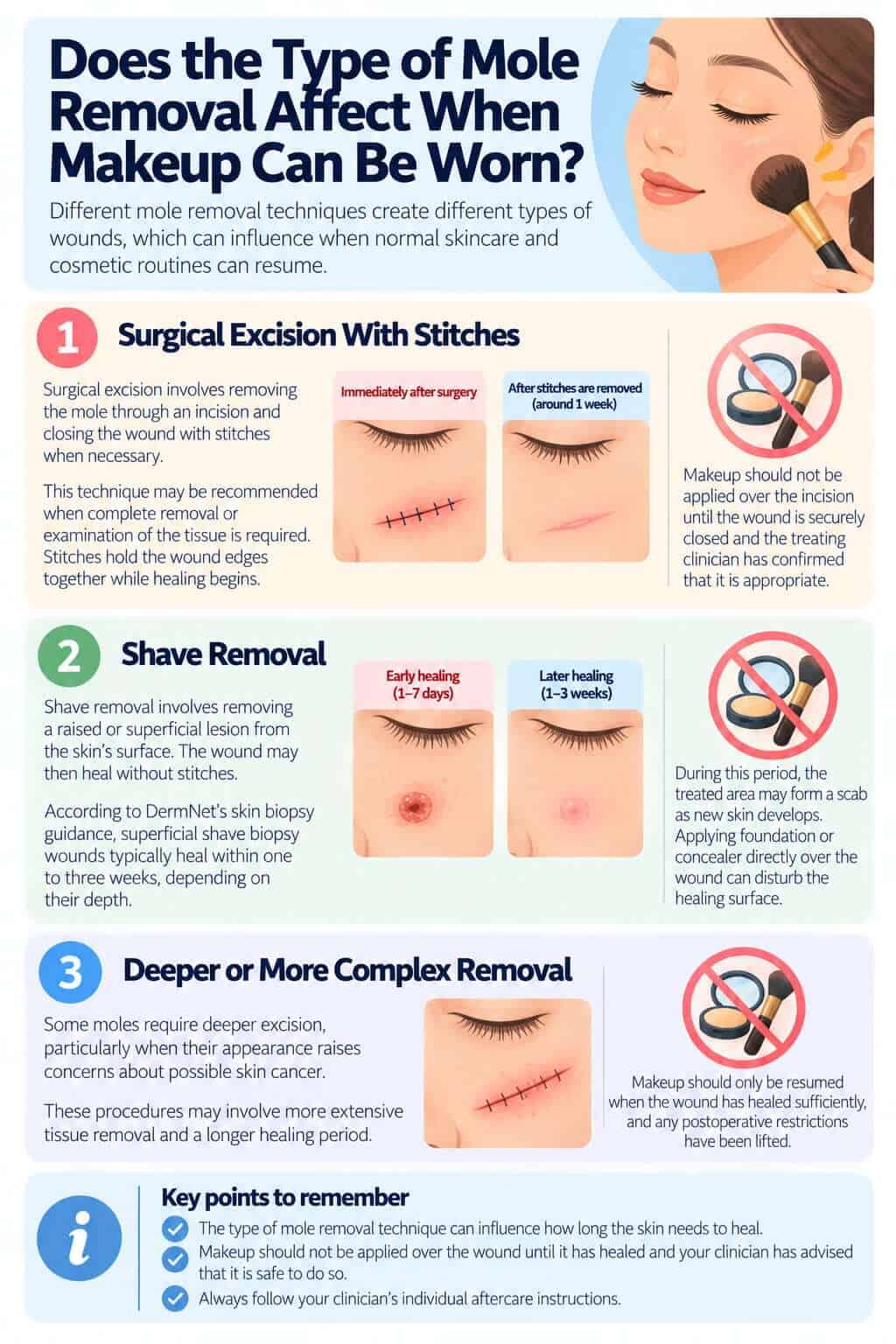
Different mole removal techniques create different types of wounds, which can influence when normal skincare and cosmetic routines can resume.
Surgical Excision With Stitches
Surgical excision involves removing the mole through an incision and closing the wound with stitches when necessary.
This technique may be recommended when complete removal or examination of the tissue is required. Stitches hold the wound edges together while healing begins.
Although facial stitches are commonly removed after approximately one week, the skin remains delicate. Makeup should not be applied over the incision until the wound is securely closed and the treating clinician has confirmed that it is appropriate.
Shave Removal
Shave removal involves removing a raised or superficial lesion from the skin’s surface. The wound may then heal without stitches.
According to DermNet’s skin biopsy guidance, superficial shave biopsy wounds typically heal within one to three weeks, depending on their depth.
During this period, the treated area may form a scab as new skin develops. Applying foundation or concealer directly over the wound can disturb the healing surface.
Deeper or More Complex Removal
Some moles require deeper excision, particularly when their appearance raises concerns about possible skin cancer.
These procedures may involve more extensive tissue removal and a longer healing period. Makeup should only be resumed when the wound has healed sufficiently, and any postoperative restrictions have been lifted.
Why Is It Important to Avoid Makeup on a Healing Wound?
Applying cosmetics before the skin has recovered can cause irritation and interfere with wound care.
The skin normally acts as a protective barrier against external substances. Following mole removal, this barrier is temporarily disrupted until new tissue covers the wound.
Several concerns are worth considering.
Irritation and Sensitivity
Foundations, concealers and other cosmetics may contain fragrances, preservatives or pigments that irritate sensitive skin.
Products that were comfortable before surgery may cause discomfort when applied near a healing incision.
Contamination and Infection
Makeup applicators and products can introduce unwanted microorganisms to the treatment area, particularly when brushes or sponges are not properly cleaned.
Keeping the wound clean and following the recommended dressing instructions helps reduce avoidable complications.
Disruption of Healing Tissue
Applying and removing makeup involves touching and rubbing the skin. These movements can disturb a scab, pull on a healing incision or place pressure on delicate tissue.
Avoiding unnecessary friction allows the wound to heal with less disturbance.
How Can Patients Safely Return to Wearing Makeup?
Once the wound has healed sufficiently and the treating clinician has approved cosmetic use, patients can gradually return to their usual routine.
Apply products gently, especially if the treated area remains pink or sensitive. Clean applicators and products that do not irritate the skin are preferable during this stage.
Patients should consider the following precautions:
- Use clean brushes or applicators to reduce unnecessary contamination.
- Choose gentle formulations and avoid products that cause stinging or irritation.
- Apply makeup lightly without rubbing or stretching the treated area.
- Remove cosmetics carefully, avoiding harsh scrubbing around the new scar.
- Stop using products that cause discomfort and seek advice if irritation persists.
The surrounding skin may tolerate makeup before the removal site itself is ready. Patients should ensure that cosmetics do not spread onto the wound or interfere with any prescribed dressings.
Even when the skin surface has closed, the new scar will continue to mature over the following months.
When Should Patients Seek Professional Advice During Recovery?
Mild redness, tenderness and some swelling can be expected after mole removal. However, symptoms that worsen rather than improve may indicate a complication requiring assessment.
Patients should seek medical advice if they notice increasing redness, warmth, pain, pus-like discharge, fever or reopening of the wound.
The location of the mole also matters. A wound near the eyelids, lips or another area that moves frequently may require additional precautions to avoid irritation during healing.
This is where individual surgical guidance becomes valuable. Dr Jonathan Dunne combines experience in skin surgery and facial reconstruction with his work as a consultant plastic surgeon. His assessment considers the mole’s location, the removal technique, and the surrounding skin when planning treatment and aftercare.
An individual assessment can help patients understand the expected healing process and when normal activities, including makeup application, may safely resume.
How Can Patients Care for Their Skin After Mole Removal?
Good aftercare supports wound healing and helps protect the developing scar. Patients should follow the instructions provided by their treating clinician, as these may differ according to the procedure.
For surgical mole removal, Dr Dunne’s practice generally recommends keeping the treated area dry for the first 48 hours, after which showering may be permitted. Individual dressing and wound-care instructions should always take priority.
Patients should avoid picking at scabs, rubbing the wound or applying unapproved skincare products directly to the treated area.
Once the skin has closed, protecting it from sunlight becomes particularly important. Ultraviolet exposure can contribute to pigmentation changes and make a healing scar more noticeable.
Scarring is a normal part of surgical removal, although its appearance commonly improves over time. The eventual result depends on factors including wound location, skin characteristics and individual healing.
Patients can find further information about wound healing and scarring in the practice’s mole removal FAQs.
Can Makeup Be Used to Cover a Mole Removal Scar?
Once the wound is completely closed, makeup may help conceal residual redness or changes in skin colour while the scar continues to mature.
A healed scar may initially appear pink or slightly raised before becoming less noticeable over time. This process can continue for several months, even after the skin has recovered enough for everyday activities.
Patients may use a light concealer or foundation to make colour differences less noticeable, provided the products do not cause irritation.
However, makeup should not be used to conceal a wound that has reopened, is still draining or shows signs of infection. In these circumstances, medical assessment is more important than cosmetic coverage.
Patients should also avoid assuming that a scar has fully healed simply because its surface appears closed. The deeper tissues may still be recovering.
Giving Your Skin Time to Heal After Mole Removal
Returning to makeup after mole removal depends on the removal technique and whether the wound has healed sufficiently. Some patients may resume cosmetics shortly after stitches are removed and the incision closes, while others may need more time for the skin to recover.
Although concealing redness or a healing mark may be tempting, allowing the wound to recover without unnecessary irritation is an important part of aftercare. Following the recommended instructions and paying attention to changes in the skin can help patients return to their usual routine safely.
For patients undergoing mole removal, Dr Dunne provides personalised guidance based on the mole’s location, the surgical technique, and individual healing needs. His recommendations help patients understand when they can safely return to wearing makeup while protecting the treated area and supporting proper wound healing.


