

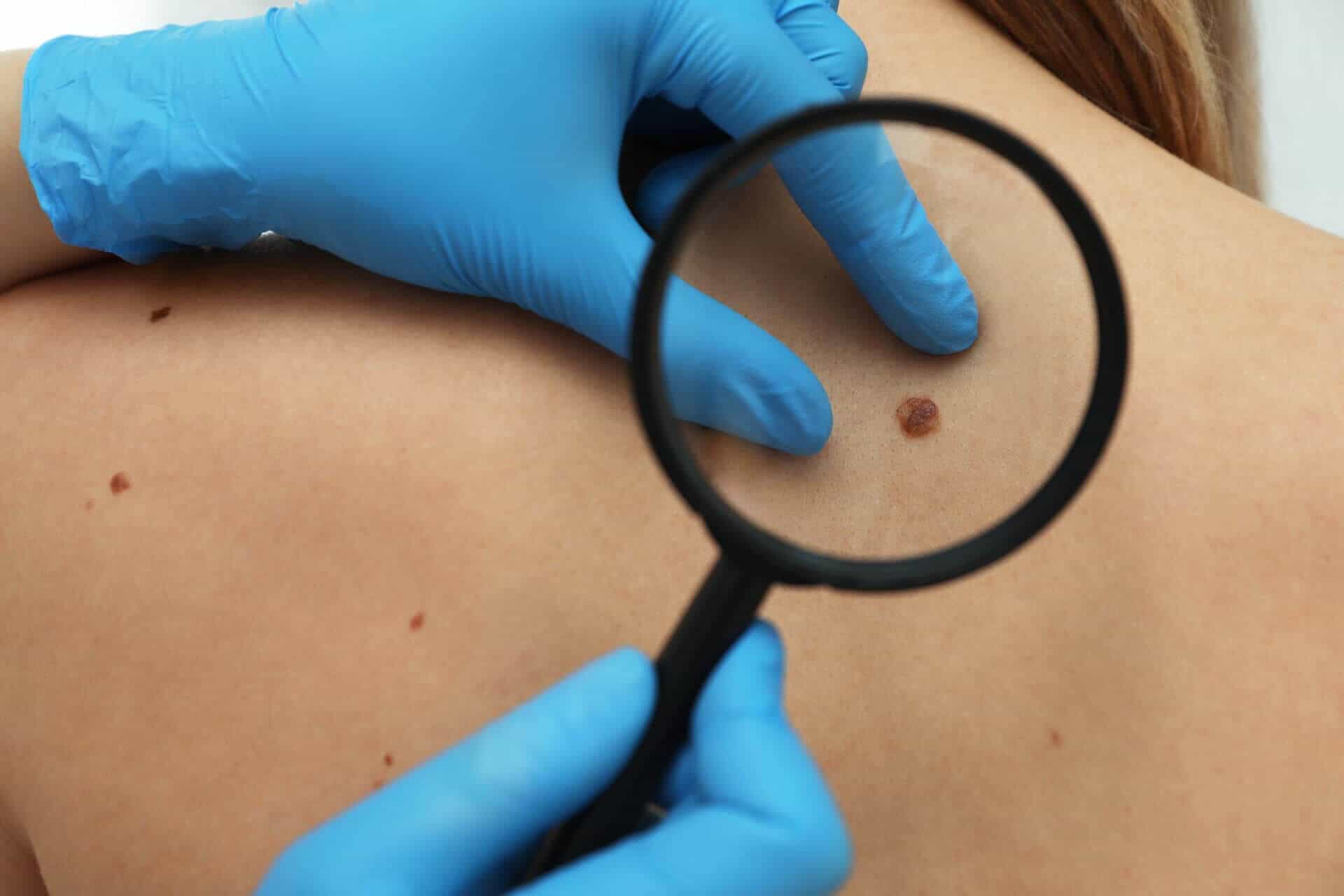
How Much Does Mole Removal Cost?
The cost of mole removal depends on why the mole is being removed, the technique required and whether laboratory analysis is necessary. A harmless mole removed for cosmetic reasons is usually treated privately, while a mole with suspicious features may be assessed and treated through an NHS referral pathway.
Private mole removal costs in the UK vary considerably. A consultation is the appropriate first step, as a changing, bleeding, itchy, or crusted mole should be assessed clinically before considering any cosmetic procedure.
Is Mole Removal Available on the NHS?
The NHS generally does not offer mole removal for cosmetic reasons if the mole is harmless. This includes moles that are stable in appearance but are disliked because of their size, prominence or location.
However, NHS assessment is appropriate where a mole has features that could indicate melanoma or another form of skin cancer. A GP may refer a patient for specialist assessment if a mole:
- Changes in size, shape or colour
- Develops an irregular border
- Contains multiple colours
- Becomes itchy, painful, inflamed, bleeding or crusted
- Appears as a new and unusual mark that does not settle
Where melanoma is suspected, urgent specialist assessment is usually arranged. If treatment is clinically necessary, the NHS ordinarily provides it without a direct treatment charge.
Typical Private Mole Removal Costs in the UK
For benign moles removed privately, the overall fee commonly includes the consultation, procedure and aftercare. Histological analysis, hospital charges and suture removal may be charged separately, depending on the provider.
As a broad guide, private treatment in the UK may fall within the following ranges:
| Treatment element | Typical private cost |
| Initial specialist consultation | £200 to £400 |
| Removal of one straightforward benign mole | £250 to £700 |
| Surgical excision with sutures | £500 to £1,500 or more |
| Histology or laboratory analysis | £100 to £300 or more |
| Removal of additional lesions | Variable, often lower per additional lesion |
These figures are indicative rather than fixed. Fees in central London may be higher, particularly where consultant-led treatment, hospital facilities or a more complex reconstruction is required.
What Affects the Cost of Mole Removal?
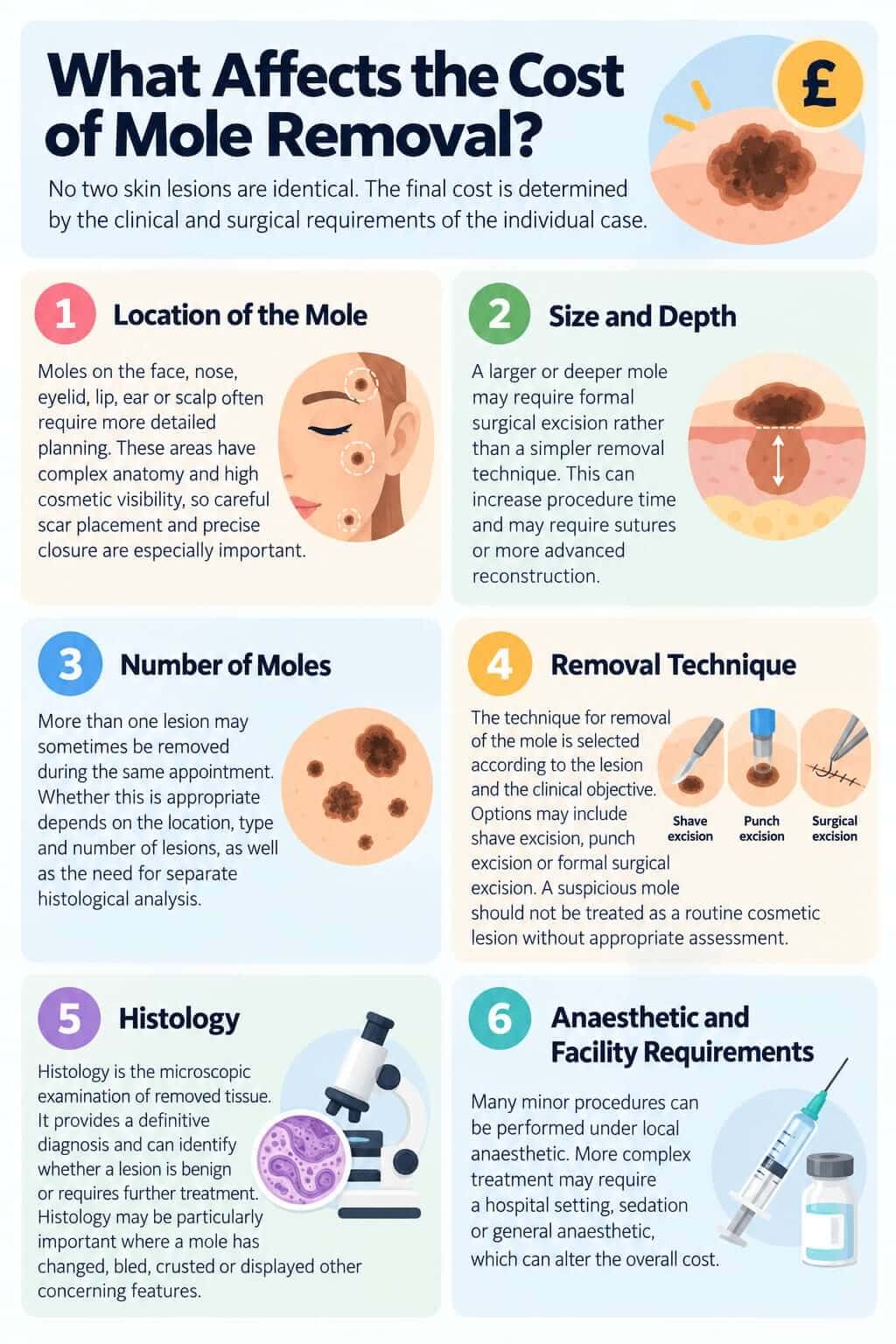
No two skin lesions are identical. The final cost depends on the clinical and surgical needs of the individual case.
Location of the Mole
Moles on the face, nose, eyelid, lip, ear or scalp often require more detailed planning. These areas have complex anatomy and high cosmetic visibility, so careful scar placement and precise closure are especially important.
Size and Depth
A larger or deeper mole may require formal surgical excision rather than a simpler removal technique. This can increase procedure time and may require sutures or more advanced reconstruction.
Number of Moles
More than one lesion may sometimes be removed during the same appointment. Whether this is appropriate depends on the location, type and number of lesions, as well as the need for separate histological analysis.
Removal Technique
The technique for removal of the mole is selected according to the lesion and the clinical objective. Options may include shave excision, punch excision or formal surgical excision. A suspicious mole should not be treated as a routine cosmetic lesion without appropriate assessment.
Histology
Histology is the microscopic examination of removed tissue. It provides a definitive diagnosis and can identify whether a lesion is benign or requires further treatment. Histology may be particularly important where a mole has changed, bled, crusted or displayed other concerning features.
Anaesthetic and Facility Requirements
Many minor procedures can be performed under local anaesthetic. More complex treatment may require a hospital setting, sedation or general anaesthetic, which can alter the overall cost.
Cosmetic Mole Removal and Medically Indicated Excision
Cosmetic mole removal is usually considered where a benign mole is prominent, catches on clothing, is repeatedly traumatised during shaving or causes persistent irritation.
Medically indicated excision has a different purpose. Where a lesion may represent melanoma or another skin cancer, the priority is accurate diagnosis and complete removal using an appropriate surgical technique. In these circumstances, the lesion may need to be sent for histological examination, and further treatment may be required depending on the result.
It is therefore important not to choose a removal method on price alone. A mole should first be assessed to establish whether it is suitable for cosmetic removal or requires a diagnostic approach.
Why Clinical Assessment Matters
Mole removal should begin with a proper clinical assessment rather than a decision based solely on cost or cosmetic preference. Before treatment, the lesion should be examined to establish whether it appears benign or has features that require further investigation.
This assessment is particularly important when there are possible signs of skin cancer, including:
- a change in size, shape, or colour;
- irregular borders;
- multiple colours;
- persistent itching;
- bleeding;
- crusting;
- failure to heal.
These features do not necessarily indicate cancer, but they should not be dismissed or treated with a routine cosmetic removal approach.
A specialist assessment enables the most appropriate treatment plan to be selected. Where a mole is suspicious, surgical excision and histological examination may be recommended to establish a definitive diagnosis. This ensures that treatment prioritises both patient safety and an appropriate cosmetic outcome.
Mole Removal with Mr Jonathan Dunne
Mr Jonathan Dunne is a consultant plastic surgeon in London who assesses benign, symptomatic and suspicious skin lesions. His approach begins with careful clinical evaluation to establish whether observation, removal or histological analysis is most appropriate.
Where mole removal surgery is indicated, Mr Dunne plans the procedure according to the lesion’s characteristics and the surrounding anatomy. This is particularly important for moles on visible or functionally sensitive areas, where meticulous excision and closure can help optimise scar quality while preserving normal function.
Following consultation, patients receive a personalised treatment recommendation and quotation based on the number of lesions, the surgical technique required, any need for histology and the complexity of closure.
Does Mole Removal Leave a Scar?
Any surgical mole removal will leave a scar. Its final appearance depends on the mole’s location, the type of excision, skin type, wound healing, and aftercare.
The aim is to place and close the incision carefully so that the scar heals as discreetly as possible. Scars commonly improve gradually over several months, although complete maturation can take longer.
Obtaining an Accurate Mole Removal Quote
Private mole removal costs can range from a few hundred pounds for a straightforward benign lesion to more where excision, pathology or complex reconstruction is required. The most reliable way to obtain an accurate cost is through a specialist consultation.
If you have a changing, bleeding, itchy or cosmetically concerning mole, a consultation with Mr Jonathan Dunne can establish whether removal is appropriate and provide a clear, individualised treatment plan.


