


How Long Do Blepharoplasty Results Last?
Blepharoplasty can provide lasting improvements to the appearance of the eyelids by removing or repositioning excess skin and fat. However, patients considering eyelid surgery often wonder how long these changes will remain visible. Although the procedure can produce long-lasting results, the natural aging process continues.
Understanding what affects the longevity of blepharoplasty can help patients develop realistic expectations about their appearance in the years following surgery.
Key Takeaways
Upper blepharoplasty results often last 10 years or longer, although individual outcomes vary.
- Lower blepharoplasty can provide long-lasting improvements to under-eye bags and puffiness, but it does not prevent future ageing.
- Skin elasticity, genetics, sun exposure and lifestyle habits can influence how the eyelids change over time.
- Final results generally develop over several months, with swelling and scar maturation continuing after the initial recovery period.
- Not every patient requires repeat surgery, although further treatment may be considered if new concerns develop.
How Long Do Upper Blepharoplasty Results Last?
The results of upper blepharoplasty are generally long-lasting, with improvements often remaining visible for 10 years or more. However, the duration varies depending on the patient’s skin quality, age and natural ageing patterns.
Upper blepharoplasty removes excess skin from the upper eyelids and may involve adjusting underlying fatty tissue (deeper fat pads). This can reduce hooding, improve eyelid definition and create a more open appearance around the eyes.
The skin removed during surgery does not grow back. Nevertheless, the remaining tissues continue to age, and changes in skin elasticity or eyebrow position may gradually affect the appearance and shape of the upper eyelids.
Some patients maintain their results for considerably longer than a decade, while others develop new skin laxity over time. The procedure provides a lasting correction of existing concerns rather than permanently preventing further changes.
Do Lower Blepharoplasty Results Last Longer?
Lower blepharoplasty can produce long-lasting improvements because the procedure addresses structural concerns such as prominent fat pads and under-eye bags.
Unlike treatments that primarily improve the skin’s surface, lower blepharoplasty can remove or reposition underlying fat to improve the contour beneath the eyes. These changes may remain noticeable for many years, although there is no fixed duration that applies to every patient.
However, lower eyelid surgery does not prevent changes in skin texture, fine lines or facial volume associated with ageing. The surrounding tissues may continue to lose elasticity, and the relationship between the lower eyelid and cheek can gradually change.
The longevity of the results also depends on the technique used and the original concerns being addressed. Patients with prominent under-eye bags may experience different long-term outcomes from those undergoing treatment primarily for loose skin.
What Factors Affect How Long Blepharoplasty Results Last?
Several factors influence how the eyelids change following surgery. While the procedure corrects existing concerns, individual characteristics and environmental influences continue to affect the surrounding tissues.
Age and Natural Skin Changes
As people age, the skin gradually loses elasticity. These changes can contribute to renewed laxity around the eyelids, even after excess tissue has been removed.
The position of the eyebrows and changes in facial fat distribution may also influence the appearance of the eyes over time. As a result, the eyelids may look different several years after surgery without the original correction necessarily having failed.
Genetics and Skin Quality
Genetics can affect skin elasticity, eyelid structure and the development of excess skin or prominent under-eye fat.
Patients with naturally heavier eyelids or a family history of early eyelid changes may notice signs of ageing at a different rate from those with firmer skin and less tissue laxity.
Sun Exposure and Lifestyle
Repeated ultraviolet exposure contributes to skin ageing and may gradually affect the quality of the delicate skin around the eyes.
Smoking can also affect skin health and tissue healing. Although lifestyle changes cannot stop ageing, protecting the skin and maintaining healthy habits may help preserve its overall condition.
Surgical Technique
The surgical approach is another important consideration. Removing too much skin or fat can affect eyelid appearance and function, while insufficient correction may leave some concerns unresolved.
Mr Jonathan Dunne, a London-based consultant plastic surgeon specialising in facial aesthetic and reconstructive surgery, assesses individual eyelid anatomy when planning treatment. This includes considering skin quality, fat distribution and eyelid position to determine an appropriate surgical approach.
Careful tissue management and realistic expectations are important for achieving balanced results that remain satisfactory as the surrounding facial structures continue to age.
When Will the Final Results of Blepharoplasty Be Visible?
Although some improvement may be noticeable soon after surgery, the final appearance takes time to develop as swelling subsides and the tissues heal.
During the first few days, bruising, puffiness and temporary tightness are common. These effects gradually improve, and many patients feel comfortable returning to usual social activities in approximately 14 days, when any bruising has largely resolved.
However, early recovery should not be confused with the final result.
The final appearance following upper or lower blepharoplasty may take approximately six to nine months to become fully apparent, although individual healing times vary.
During this period, scars continue to mature, swelling resolves gradually, and the eyelid contours settle.
Gaining a better understanding of the blepharoplasty recovery timeline can help patients distinguish normal postoperative changes from their eventual surgical outcome.
How Can Patients Help Maintain Their Blepharoplasty Results?
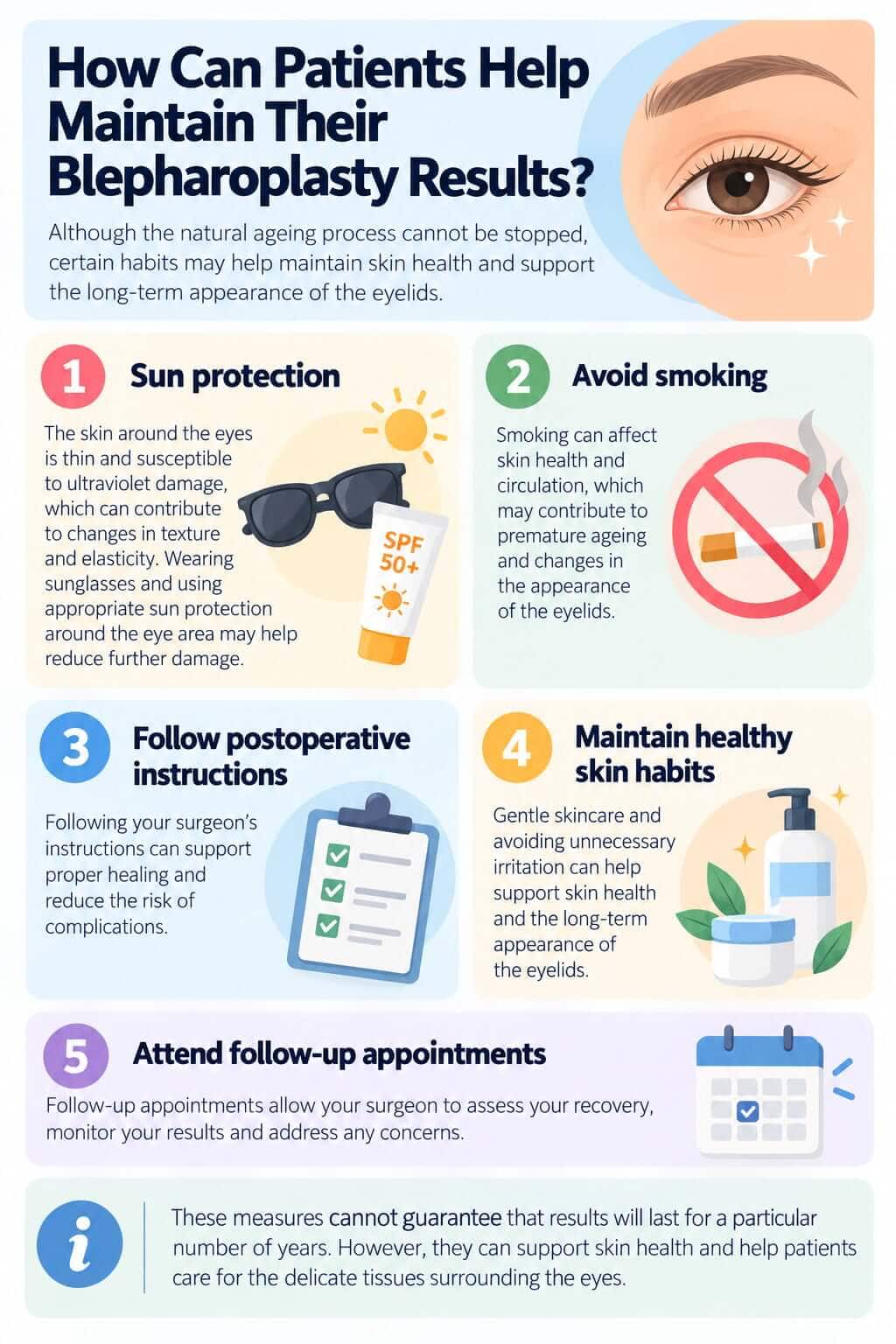
Although the natural ageing process cannot be stopped, certain habits may help maintain skin health and support the long-term appearance of the eyelids.
Sun protection is particularly important. The skin around the eyes is thin and susceptible to ultraviolet damage, which can contribute to changes in texture and elasticity. Wearing sunglasses and using appropriate sun protection around the eye area may help reduce further damage.
Other useful measures include:
- Avoiding smoking, which can affect skin health and circulation.
- Following postoperative instructions to support proper healing and reduce the risk of complications.
- Maintaining healthy skin habits, including gentle skincare and avoiding unnecessary irritation.
- Attending follow-up appointments when recommended to assess recovery and address concerns.
These measures cannot guarantee that results will last for a particular number of years. However, they can support skin health and help patients care for the delicate tissues surrounding the eyes.
Will Blepharoplasty Need to Be Repeated?
Repeat blepharoplasty is not always necessary. Many patients remain satisfied with their results for years without requiring further surgery.
However, some individuals may develop new upper eyelid laxity as they age. Others may notice changes in the lower eyelid or surrounding facial tissues that were not present during the original procedure.
Whether additional treatment is appropriate depends on the cause of these changes, the condition of the eyelids and the patient’s individual concerns.
Revision surgery may be more complex because previous surgery can alter tissue availability and create scar tissue. It also carries risks, including dry eyes, asymmetry and changes in eyelid position.
Patients considering another procedure should undergo a careful assessment to establish whether further surgery is suitable or whether an alternative approach would be more appropriate.
Understanding the Long-Term Results of Blepharoplasty
Blepharoplasty can provide lasting improvements to eyelid appearance, but the results vary between individuals. While some patients maintain their results for a decade or longer, others may notice gradual changes as the surrounding tissues continue to age.
The most useful way to assess long-term results is to understand what the procedure can achieve rather than expecting the eyelids to remain unchanged permanently. Even as ageing continues, the improvements achieved through surgery may remain noticeable for many years.
Patients considering blepharoplasty should take time to understand how their eyelid anatomy, skin quality and individual concerns may influence the outcome. Mr Jonathan Dunne can help patients explore how their results may change over time, taking into account their facial features, treatment goals and the natural ageing process. Through booking an individual assessment, patients can gain a clearer understanding of what eyelid surgery may achieve and make informed decisions with realistic expectations about their long-term results.


