How Long After Blepharoplasty Can I Drink Alcohol?
Having a glass of wine after eyelid surgery may seem harmless, but timing matters more than most patients expect. Most surgeons ask you to avoid alcohol completely for the first day or two after blepharoplasty and often recommend waiting two to four weeks. Alcohol can interfere with the healing process, increase swelling, and make bruising more noticeable. It may also interact with medications prescribed to manage pain or prevent infection.
Knowing when it is safe to resume drinking can help you avoid unnecessary complications and support a smoother recovery. This guide explains why alcohol should be avoided after eyelid surgery, how long you may need to wait, and what to consider before enjoying a glass of wine again.
Recommended Waiting Periods for Alcohol After Eyelid Surgery
During the first 24 hours after eyelid surgery, alcohol should be avoided entirely, because patients are also told not to drive, use machinery, or take sedatives on that day. Anaesthesia and pain relief can leave your judgement slightly dulled, and alcohol adds to that effect. Plan to keep alcohol out of reach on the first evening so that resting is your only task.
After that, the first two weeks are the most delicate stage of healing. One clinical guide treats two weeks as the minimum for cosmetic procedures and about four weeks for eyelid surgery, while another provider suggests avoiding alcohol for about three months.
Your consultant plastic surgeon will set the right date based on your health, your medications, and the type of surgery you had. Because guidance differs between practices, write down your own surgeon’s recommended recovery timeline and share it with family and friends.
Why Alcohol and Eyelid Surgery Don’t Mix
Bleeding, Bruising, and Swelling
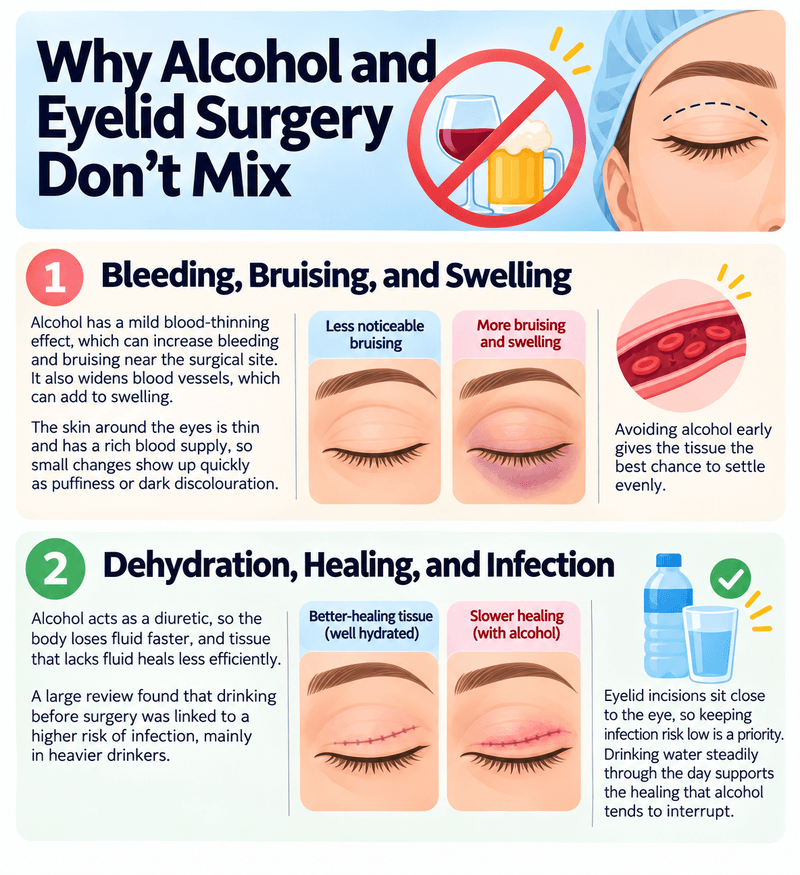
Alcohol has a mild blood-thinning effect, which can increase bleeding and bruising near the surgical site. It also widens blood vessels, which can add to swelling. The skin around the eyes is thin and has a rich blood supply, so small changes show up quickly as puffiness or dark discolouration. Avoiding alcohol early gives the tissue the best chance to settle evenly.
Dehydration, Healing, and Infection
Alcohol acts as a diuretic, so the body loses fluid faster, and tissue that lacks fluid heals less efficiently. A large review found that drinking before surgery was linked to a higher risk of infection, mainly in heavier drinkers. Eyelid incisions sit close to the eye, so keeping infection risk low is a priority. Drinking water steadily through the day supports the healing that alcohol tends to interrupt.
Alcohol, Medications, and Surgery: What You Need to Know
Avoid alcohol before surgery, as it can affect how your body responds to anaesthetic medication. Recommendations vary, but some surgeons advise stopping at least 48 hours to one or two weeks beforehand, with longer periods for heavier drinkers. Follow your surgeon’s instructions and disclose your drinking habits during your consultation. If you drink accidentally during the restricted period, inform your surgical team.
After surgery, alcohol can interact with oral painkillers and antibiotics, causing nausea, flushing, or excessive drowsiness. Read medication labels, check with your pharmacist, and wait until your course is finished and your surgeon approves drinking again.
Avoid alcohol completely for the first two weeks after surgery. After that, follow your surgeon’s advice on when you can resume drinking. If a social event falls within your recovery period, consider scheduling surgery afterwards. Alcohol-free alternatives can help, but check labels for trace amounts of alcohol.
Returning to Drinking Safely
Once your surgeon confirms that you are clear, begin with a small amount and see how you feel. After several weeks without alcohol, your tolerance may be lower than you remember, and leftover medication could still interact with it. Drinking a glass of water between alcoholic drinks helps limit dehydration, which can aggravate lingering swelling.
Moderation remains wise for several months. Heavy drinking during the first three to six months can still affect scar quality, and eyelid scars heal best under good conditions. Keeping your intake modest through the first three months supports a smoother final result.
Warning Signs After Drinking During Recovery
Contact your clinic promptly if you drink during recovery and experience any of the following:
- Sudden new bleeding
- Significant new bruising after the early recovery period
- Unusual swelling
- Severe headache or confusion
- Excessive drowsiness
- Vomiting that prevents you from taking your medication
These symptoms may have other causes, but your surgical team can determine whether they require attention.
Seek immediate medical attention at an eye department or the nearest emergency department if you notice any of these eye-related symptoms:
- Increasing eye pain
- Worsening vision
- Increasing redness
- Excessive discharge
Do not wait to see whether these problems resolve on their own, as delays can put your eyesight at risk. Save your surgeon’s emergency contact number in your phone before surgery so you can reach the clinic quickly if needed.
FAQs
Can I drink wine one week after blepharoplasty?
Most surgeons advise against it. At one week, stitches may still be in place, swelling is still settling, and you may still be taking medication. Waiting for your surgeon’s approval is the safest choice.
Is alcohol-free beer acceptable during recovery?
It is generally considered acceptable, although some products contain small traces of alcohol. Read the label if your surgeon has asked for complete avoidance. Water and herbal tea are also good options, since hydration supports healing.
Planning a Safe and Comfortable Recovery
Alcohol and eyelid surgery are best kept apart for at least the first two weeks, and many patients benefit from a break of four weeks or more. The reasons are practical ones, including a higher risk of bleeding and swelling, slower healing, and possible medication reactions.
Because each patient and procedure is different, your surgeon’s instructions should always take priority over general guidance. Confirm your restriction date at your consultation and plan social events around it.