How Common Is Mole Removal?
Mole removal is a commonly performed minor procedure in dermatology and plastic surgery. Many people consider having a mole removed because of changes in its appearance, persistent irritation or cosmetic preferences. However, most moles are harmless and never require treatment.
Understanding how common mole removal is, why it is performed and when surgery may be appropriate can help patients recognise the difference between routine skin concerns and those requiring medical attention.
Key Takeaways
Mole removal is a common minor surgical procedure performed for both medical and cosmetic reasons.
- Although most people have moles, the majority do not need removal unless they cause problems or show concerning changes.
- Common reasons for removal include suspicious features, repeated irritation and cosmetic preferences.
- Mole removal is usually performed under local anaesthesia, with treatment tailored to the lesion’s size and characteristics.
- A professional assessment is important because some changing or unusual-looking skin lesions may require further investigation.
How Common Is Mole Removal in the UK?
Mole removal is a routine procedure in dermatology and plastic surgery practices throughout the UK. It is frequently performed to investigate suspicious lesions, address recurring irritation or remove benign moles that patients find cosmetically concerning.
However, no widely established national figure shows exactly how many mole removal procedures are performed in the UK each year. The procedure is considered common because it is a standard part of clinical skin care, rather than because a specific national treatment rate has been established.
Moles themselves are extremely common, and most are harmless and can safely be left alone. Their number and appearance can vary depending on genetics, age, skin type and sun exposure. Having several moles does not automatically mean they need to be removed.
Patients considering mole removal should understand that treatment is not always necessary. What matters is whether a mole has concerning characteristics, causes discomfort, or is something the patient wants removed for cosmetic reasons.
Why Is Mole Removal Such a Common Procedure?
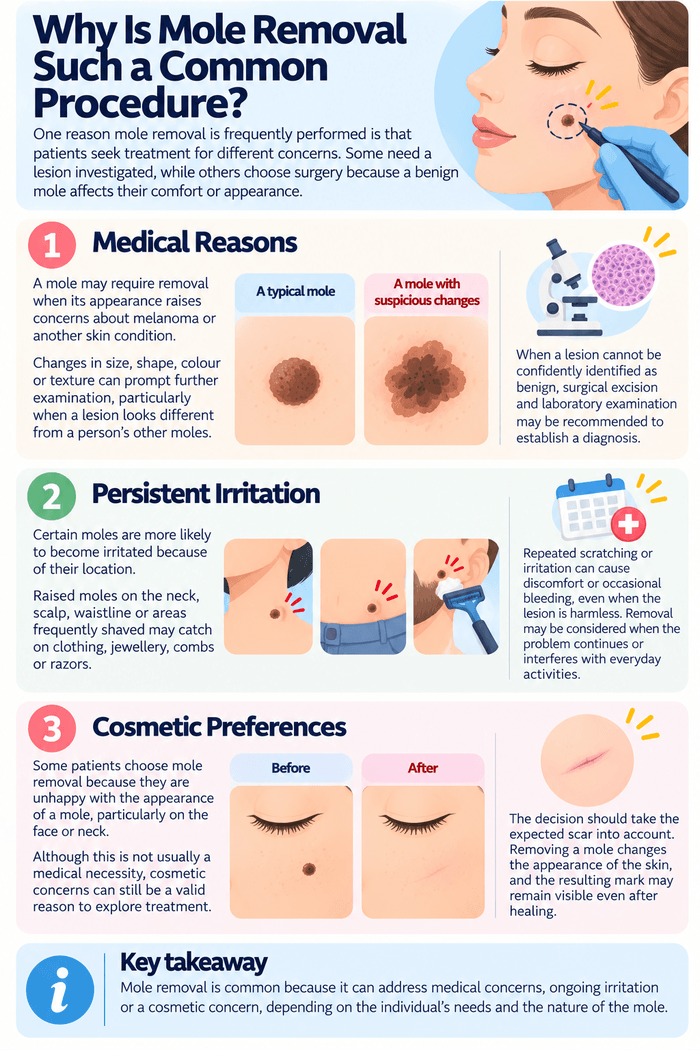
One reason mole removal is frequently performed is that patients seek treatment for different concerns. Some need a lesion investigated, while others choose surgery because a benign mole affects their comfort or appearance.
Medical Reasons
A mole may require removal when its appearance raises concerns about melanoma or another skin condition. Changes in size, shape, colour or texture can prompt further examination, particularly when a lesion looks different from a person’s other moles.
Recognising potential signs of skin cancer is important because suspicious changes should be assessed promptly. When a lesion cannot be confidently identified as benign, surgical excision and laboratory examination will be recommended to establish a diagnosis.
Persistent Irritation
Certain moles are more likely to become irritated because of their location. Raised moles on the neck, scalp, waistline or areas frequently shaved may catch on clothing, jewellery, combs or razors.
Repeated scratching or irritation of moles can cause discomfort or occasional bleeding, even when the lesion is harmless. Removal may be considered when the problem continues or interferes with everyday activities, although unexplained bleeding or persistent changes should be medically assessed. This may be performed as a shave excision and avoid stitches.
Cosmetic Preferences
Some patients choose mole removal because they are unhappy with the appearance of a mole, particularly on the face or neck. Although this is not usually a medical necessity, cosmetic concerns can still be a valid reason to explore treatment.
The decision should take the expected scar into account. Removing a mole changes the appearance of the skin, and the resulting mark may remain visible even after healing. The aim is that it would not be noticed at conversational distance.
How Often Do Moles Actually Need to Be Removed?
Despite how commonly mole removal is performed, most moles never require surgical treatment. Many remain stable for years, while others gradually change as part of normal skin development and ageing.
The presence of a mole alone is not a reason for removal. A clinician may recommend monitoring when its appearance is reassuring, and there are no symptoms or concerning changes.
However, certain features warrant medical assessment, including:
- Asymmetry: One half of the mole looks noticeably different from the other.
- Borders are irregular: The edges appear uneven, blurred or poorly defined.
- Colour variation: The mole contains several colours or develops new pigmentation.
- Diameter: Greater than 6mm
- Evolving changes over time: The mole grows, changes shape, bleeds, crusts or develops persistent symptoms.
These features do not necessarily mean a mole is cancerous, but they should not be ignored. An assessment can help determine whether further investigation, monitoring or removal is appropriate.
Is Mole Removal Usually a Straightforward Procedure?
Most uncomplicated mole removals are performed as minor outpatient procedures under local anaesthesia. Patients are usually awake during treatment, with the surrounding skin numbed to minimise discomfort. The procedure often takes approximately 10 to 30 minutes, although larger or more complex lesions may require additional time.
The removal technique depends on the mole’s size, depth, location and clinical characteristics. Surgical excision will be recommended when complete removal and laboratory examination are necessary where a skin cancer diagnosis is being considered, while shave removal may be suitable for certain benign, raised moles. Each approach has different considerations for wound healing and scarring.
Although mole removal is generally straightforward, careful surgical planning remains important, particularly for lesions on visible areas such as the face. The location of the incision, the amount of tissue removed and the closure technique can all influence the appearance of the eventual scar.
Mr Jonathan Dunne, a consultant plastic surgeon specialising in skin surgery and facial reconstruction, considers these factors when assessing patients for mole removal. He evaluates the lesion and surrounding skin to determine an appropriate technique, with attention to both safe removal and the expected cosmetic outcome.
Does the Location of a Mole Influence the Decision to Remove It?
The location of a mole can affect both the reason for treatment and the technique used. Moles in areas exposed to repeated friction may become uncomfortable, while those on the face can raise concerns about visible scarring.
For facial mole removal, surgical planning involves considering the natural contours and lines of the skin. The aim is to remove the lesion appropriately while managing the wound in a way that supports healing and minimises unnecessary scarring.
Patients should also recognise that no surgical removal is completely scar-free. Although scars often become flatter and less noticeable over time, their appearance varies with skin characteristics, wound location, and individual healing.
Careful incision placement, wound closure and aftercare can influence scarring after mole excision. These considerations are particularly relevant for visible areas where the expected cosmetic outcome may influence the decision to proceed, and are a core consideration for a Plastic Surgeon performing many mole removals..
Is It Normal to Have Several Moles Removed?
Some patients undergo removal of more than one mole, either during a single appointment or through separate procedures. This may happen when multiple lesions cause irritation, raise clinical concerns or are unwanted for cosmetic reasons.
However, having numerous moles does not mean they should all be removed. Patients with many moles may benefit more from regular skin examinations and monitoring than from removing every lesion.
Each mole should be assessed individually because its appearance, location and reason for removal may differ. When several procedures are being considered, the clinician can discuss which lesions require attention and whether treatment should be performed together or separately.
Removing selected moles also does not prevent new moles from developing or eliminate the possibility of skin cancer elsewhere. Continued skin awareness remains important, particularly for patients with numerous or atypical moles.
What Should Patients Know Before Choosing Mole Removal?
Although mole removal is a familiar procedure, patients should understand why it is being recommended and what the treatment is likely to achieve. A benign mole that causes no discomfort may not need surgery, while a suspicious lesion may require prompt investigation.
Patients should also consider the expected scar, healing requirements and whether the removed tissue will need laboratory examination. These details can influence the surgical approach and help establish realistic expectations.
A consultation provides an opportunity to discuss these considerations and determine whether removal is appropriate. Patients can also learn more about how the location and characteristics of the mole may affect the procedure.
Knowing When Mole Removal Is Worth Considering
Mole removal is a routine part of skin surgery, but most harmless moles can remain untreated. The decision to remove one should depend on whether it raises medical concerns, causes repeated discomfort or affects the patient’s confidence, rather than simply how common the procedure is.
Patients should also understand what removal involves, including the possibility of scarring and the importance of examining suspicious lesions. Having these details explained before treatment can help patients feel more comfortable with their decision and know what to expect.
For those considering mole removal, Mr Dunne provides an individual assessment that considers the mole’s characteristics, its location and the patient’s concerns. His guidance helps patients understand when removal may be beneficial and which treatment approach is appropriate, with careful attention to both skin health and the expected cosmetic outcome being of utmost importance.