

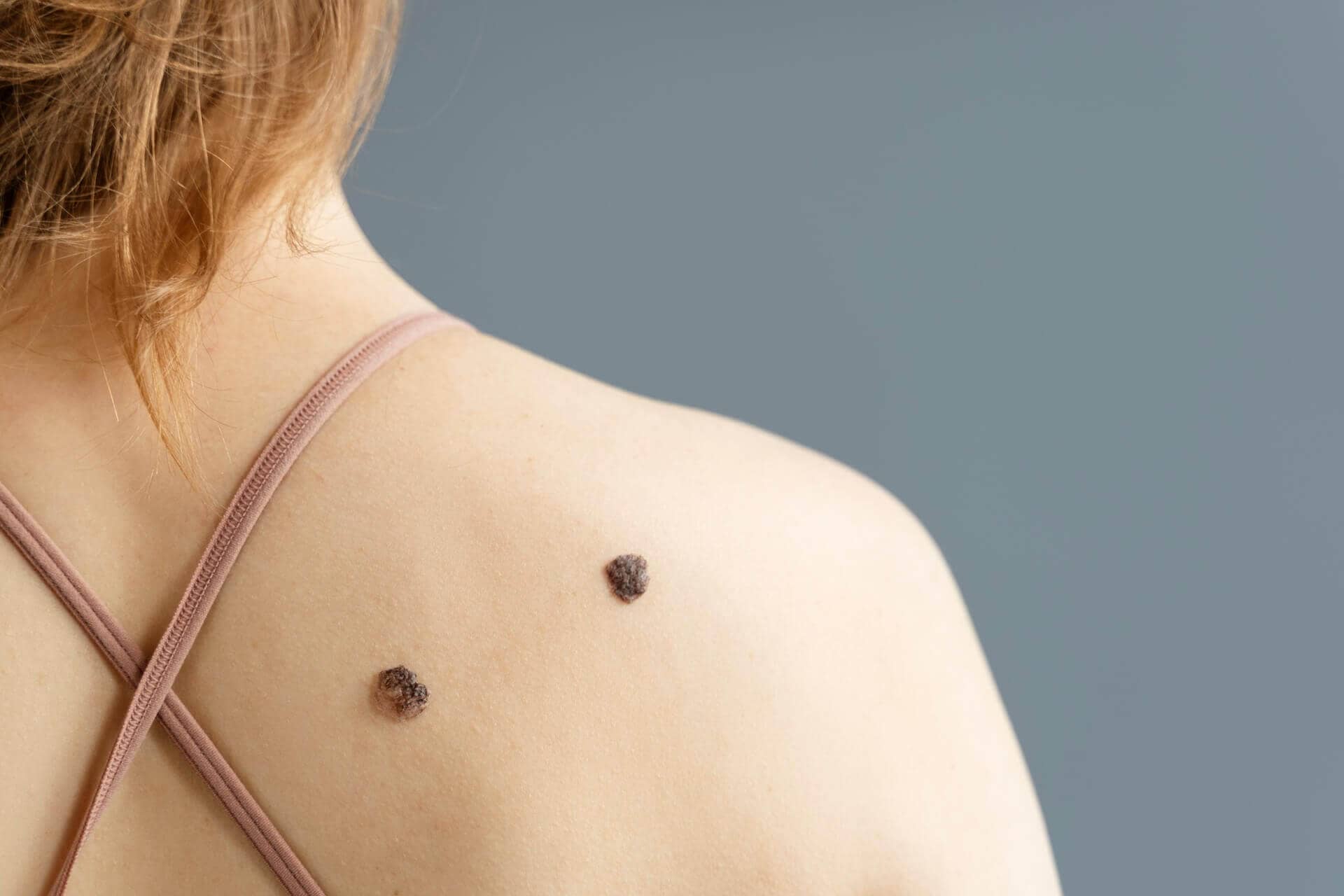
Can a Mole Turn Into Skin Cancer If You Scratch It?
Scratching a mole can be worrying, especially if it feels tender, looks irritated or leaves a small scab behind. It is natural to wonder whether this kind of change means something more serious.
While many scratched moles settle with time, it is still helpful to know what to look out for and when a mole may need professional assessment.
Why Does a Mole Bleed After Being Scratched?
Many harmless moles are raised above the skin surface and can be vulnerable to everyday friction. They may catch on clothing, necklaces, towels, razors or fingernails. Scratching can disrupt the superficial skin over the mole and cause minor bleeding, tenderness, redness or a small scab.
In most cases, the area should settle as the skin heals. Avoid further irritation and allow any scab to heal naturally. Repeated scratching or picking can prolong inflammation and make it more difficult to assess the true appearance of the lesion.
Although bleeding after a clear injury is often benign, it is still sensible to monitor the mole carefully. If it does not heal as expected, continues to bleed or appears different once the inflammation has settled, medical assessment is advisable.
Can Trauma Reveal an Existing Skin Cancer?
Scratching does not cause either melanoma, basal cell carcinoma or squamous cell carcinoma. It can, however, draw attention to a lesion that was already abnormal.
Some skin cancers may be fragile and more likely to bleed, crust or become irritated. A person may assume that a mole is bleeding because they scratched it, when in fact the lesion may have changed beforehand. For this reason, do not dismiss persistent bleeding, crusting, or irritation simply because the area has been traumatised.
The NHS advises assessing any mole that changes in size, shape, or colour, or becomes painful, itchy, inflamed, bleeding, or crusty. Early diagnosis is important because melanoma is generally more straightforward to treat when identified at an early stage.
It is therefore important to recognise the possible signs of skin cancer rather than attributing all bleeding or irritation to accidental trauma.
Warning Signs That a Mole Should Be Checked
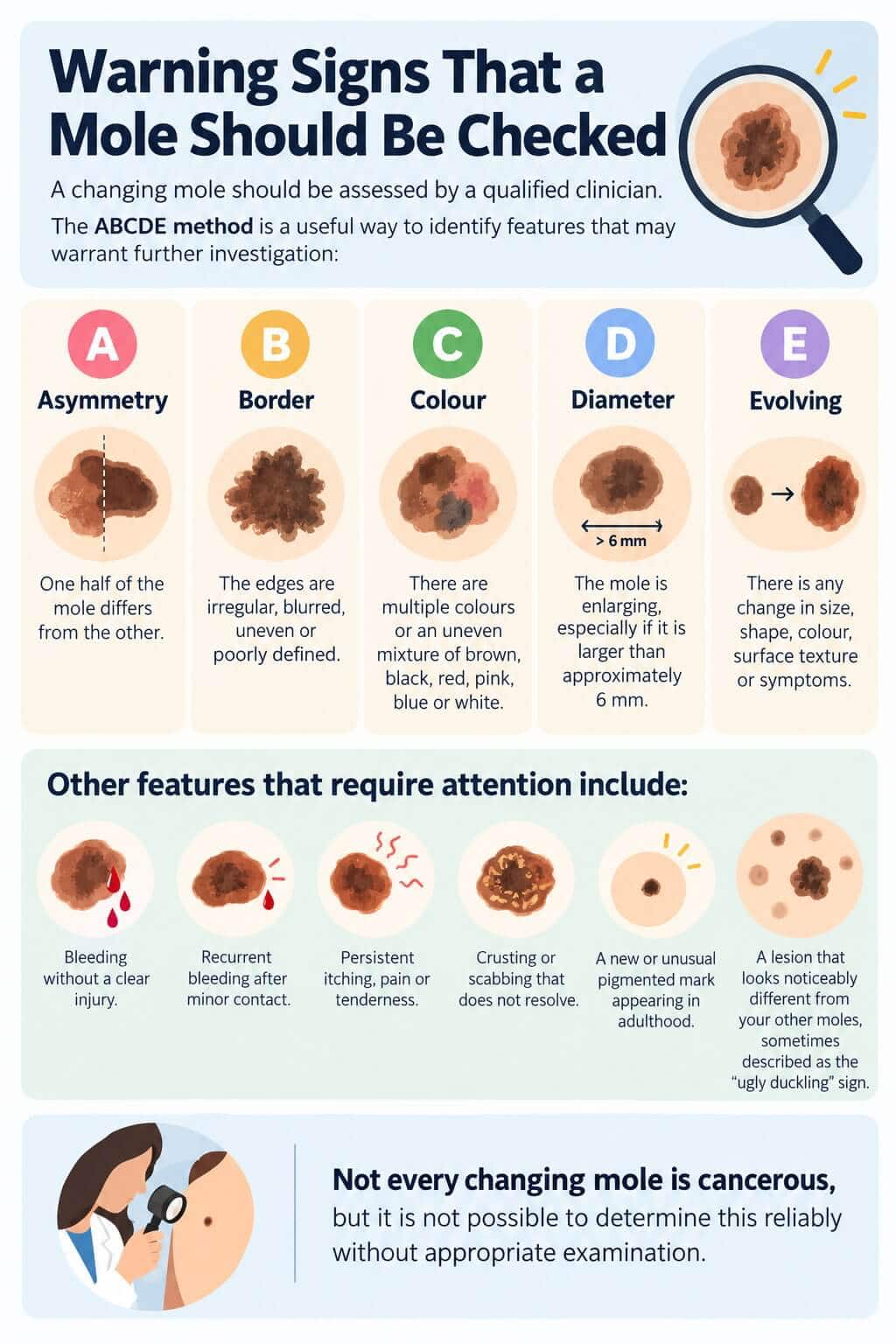
A changing mole should be assessed by a qualified clinician. The ABCDE method is a useful way to identify features that may warrant further investigation:
- Asymmetry: One half of the mole differs from the other.
- Border: The edges are irregular, blurred, uneven or poorly defined.
- Colour: Multiple colours or an uneven mixture of brown, black, red, pink, blue, or white.
- Diameter: The mole is enlarging, especially if it is larger than approximately 6 mm.
- Evolving: Any change in size, shape, colour, surface texture, or symptoms.
Other features that require attention include:
- Bleeding without a clear injury
- Recurrent bleeding after minor contact
- Persistent itching, pain or tenderness
- Crusting or scabbing that does not resolve
- A new or unusual pigmented mark appearing in adulthood
- A lesion that looks noticeably different from your other moles, sometimes described as the “ugly duckling” sign
Not every changing mole is cancerous, but it is not possible to determine this reliably without appropriate examination.
What Should You Do If You Scratch a Mole?
If you have accidentally scratched a mole, wash the area gently with clean water and apply light pressure with a clean dressing if there is minor bleeding. Avoid picking at the scab or shaving over the area while it heals.
It can be helpful to note the appearance of the mole once the immediate irritation has settled. A clear photograph may assist with comparison over time, but photographs should never delay a professional assessment if there are concerning features.
You should seek medical advice if the mole continues to bleed, fails to heal, repeatedly catches on clothing, or shows any visible change.
Do not attempt mole removal yourself or use over-the-counter chemical removal products, as these can cause scarring and may delay diagnosis of a potentially serious lesion.
How Are Suspicious Moles Assessed?
A clinical assessment considers the lesion’s appearance, symptoms, history of change and location on the body. Dermoscopy, a specialised method of examining skin lesions under magnification, can provide further detail that is not visible to the naked eye.
Where a lesion is concerning, surgical excision may be recommended. The tissue is then sent for histological examination, which provides the definitive diagnosis. If skin cancer is identified, further treatment is planned according to the type, depth and location of the lesion.
Mole Assessment with Mr Jonathan Dunne
Mr Jonathan Dunne is a London-based consultant plastic surgeon who assesses changing, bleeding and symptomatic skin lesions. He recognises that a mole may be irritated through simple trauma, but that persistent symptoms or alteration in appearance require careful clinical consideration.
Where excision is appropriate, Mr Dunne applies sound oncological principles alongside precise reconstructive planning. This is particularly important for lesions on the face, scalp, ears, and other visible or anatomically complex areas, where complete removal must be balanced with preserving function and optimising scar quality.
When to Arrange an Assessment
Scratching a mole does not cause skin cancer. However, a mole that bleeds repeatedly, develops persistent crusting, changes in colour or shape, or fails to heal should be assessed without delay.
If you are concerned about a changing mole or other skin lesion, arrange a consultation with Mr Jonathan Dunne’s London practice. Early, expert assessment provides clarity and, where treatment is required, enables the most appropriate surgical plan to be made.


