Is There a Limit to How Many Blepharoplasty Surgeries You Can Have?
Blepharoplasty can provide long-lasting improvements to the appearance and function of the eyelids, but some patients consider another procedure as they age or if their initial results do not meet expectations. This raises an important question about how many times eyelid surgery can safely be performed.
Key Takeaways
There is no fixed number of blepharoplasty surgeries considered safe for every patient.
- Repeat surgery may be considered when new eyelid changes develop or when a previous procedure requires correction.
- Scar tissue, remaining skin and eyelid function are important factors in determining whether another operation is suitable.
- Revision blepharoplasty can be more complex than the original surgery and may carry additional risks.
- Not every change in eyelid appearance requires further surgery, particularly when the concern involves the eyebrows or surrounding facial tissues.
How Many Times Can Blepharoplasty Be Performed?
There is no universal limit on how many blepharoplasty procedures a person can undergo. Some patients have a second operation years after their first, while others may require revision surgery to address a specific concern. However, each additional procedure must be assessed individually because previous surgery can affect the tissues available for further treatment.
An upper blepharoplasty removes excess eyelid skin and may involve adjusting underlying fat. Because the eyelids contain delicate structures essential for protecting the eyes, repeated removal of tissue is not always possible or appropriate. Previous surgery can also change the position of the eyelid crease and the way the surrounding tissues move.
A patient who has undergone one successful procedure may be suitable for another years later, while someone with significant scarring or difficulty closing the eyes may not be a suitable candidate. The decision depends on eyelid health and surgical safety rather than the number of previous operations alone.
Why Might Someone Need a Second Blepharoplasty?
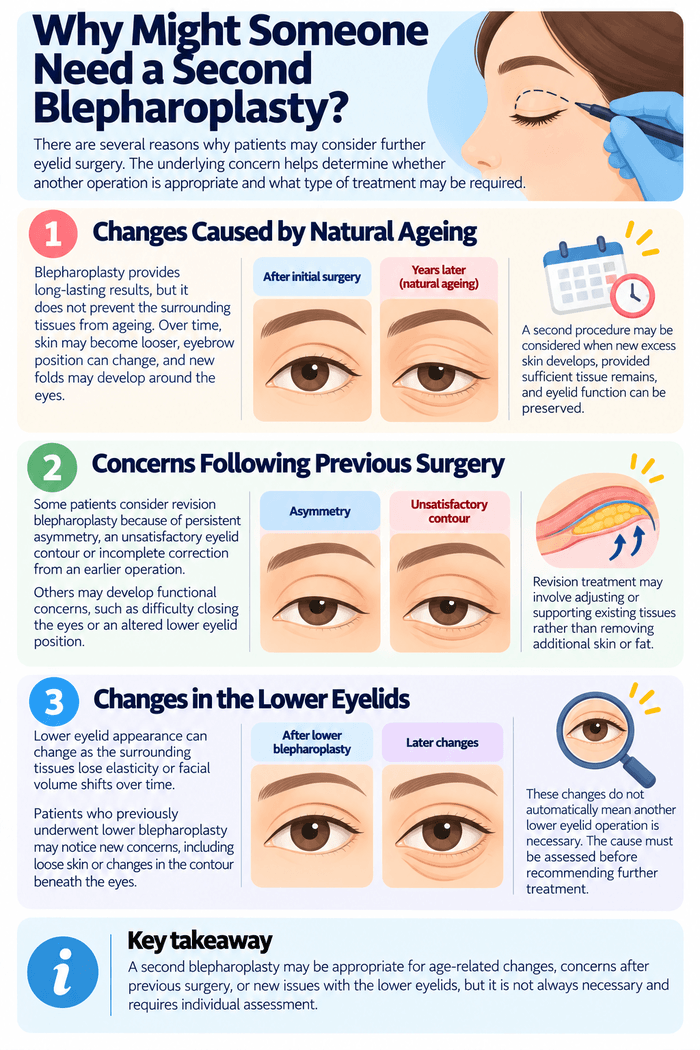
There are several reasons why patients may consider further eyelid surgery. The underlying concern helps determine whether another operation is appropriate and what type of treatment may be required.
Changes Caused by Natural Ageing
Blepharoplasty provides long-lasting results, but it does not prevent the surrounding tissues from ageing. Over time, skin may become looser, eyebrow position can change, and new folds may develop around the eyes. Some patients notice these changes many years after their original surgery.
A second procedure may be considered when new excess skin develops, provided sufficient tissue remains, and eyelid function can be preserved. However, the appearance of further skin laxity does not automatically mean another operation is necessary.
Concerns Following Previous Surgery
Some patients consider revision blepharoplasty because of persistent asymmetry, an unsatisfactory eyelid contour or incomplete correction from an earlier operation. Others may develop functional concerns, such as difficulty closing the eyes or an altered lower eyelid position.
These situations require careful assessment because further tissue removal is not necessarily the solution. Depending on the problem, revision treatment may involve adjusting or supporting existing tissues rather than removing additional skin or fat.
Changes in the Lower Eyelids
Lower eyelid appearance can change as the surrounding tissues lose elasticity or facial volume shifts over time. Patients who previously underwent lower blepharoplasty may notice new concerns, including loose skin or changes in the contour beneath the eyes.
However, these changes do not automatically mean another lower eyelid operation is necessary. The cause must be assessed before recommending further treatment, particularly when previous surgery has affected eyelid support.
What Makes Repeat Blepharoplasty More Complex?
Revision eyelid surgery can be more technically demanding because the anatomy has already been altered by a previous procedure. Scar tissue, reduced skin availability and changes in eyelid position may affect the surgical approach and the results that can safely be achieved.
Scar Tissue and Tissue Changes
Scar tissue develops naturally after surgery and can make normal tissue planes more difficult to identify during another operation. Previous incisions may also affect skin movement and the flexibility of the eyelids. These changes can influence how the surgeon approaches further correction and whether additional techniques are needed.
Limited Remaining Skin
One of the main considerations in repeat upper blepharoplasty is whether sufficient skin remains for the eyelids to close comfortably. Removing too much skin can interfere with normal eyelid closure, potentially exposing the surface of the eye to dryness and irritation.
Preserving eyelid function is more important than removing additional skin for cosmetic improvement. When there is insufficient tissue for safe removal, another approach may be necessary, or further surgery may not be advisable.
Eyelid Position and Support
The lower eyelid requires adequate support to maintain its position against the eye. Previous surgery, scarring or existing tissue laxity may increase the risk of the eyelid pulling downwards or turning outwards.
Repeat eyelid surgery carries potential risks, including dry eyes, difficulty closing the eyes, abnormal eyelid position and the possible need for further correction. These concerns make a detailed assessment particularly important before another procedure is considered, helping ensure that eyelid function is preserved.
How Do Surgeons Assess Whether Another Blepharoplasty Is Safe?
Before recommending repeat surgery, the surgeon must establish what was done previously and whether the eyelids can safely tolerate further treatment. This involves examining the current eyelid anatomy, reviewing the patient’s surgical history and identifying the cause of the concern.
The assessment may consider:
- Previous surgical history: The techniques used, timing of earlier operations and any complications.
- Remaining skin and tissue: Whether enough healthy tissue is available for further correction.
- Eyelid closure and function: The ability to blink normally and protect the eye.
- Scar tissue and eyelid position: Changes that may affect the proposed surgical approach.
- Current concerns: Whether the problem involves excess skin, fat distribution, eyebrow position or another structure.
Patients should provide details of previous operations, including surgical records where available. This information can help the surgeon understand which tissues were altered and whether another procedure is likely to address the current concern.
As a consultant plastic surgeon with specialist experience in facial aesthetic and reconstructive surgery, Mr Jonathan Dunne considers both eyelid appearance and function when assessing treatment options. His approach involves examining the surrounding anatomy and identifying whether further surgery may offer an appropriate improvement without compromising eyelid health.
How Long Should Patients Wait Before Having Another Blepharoplasty?
There is no single waiting period suitable for every patient. The appropriate timing depends on the reason for further treatment, the extent of the original surgery and how the eyelids have healed.
Swelling and changes in eyelid contour can continue for several months following blepharoplasty. Mr Dunne’s treatment guidance indicates that final results may take approximately six to nine months to become apparent. For patients concerned about appearance, allowing the tissues to settle can help establish whether revision surgery is necessary.
Operating too early may make assessment more difficult because swelling and scar maturation can temporarily affect the eyelid’s appearance. However, the six-to-nine-month recovery period is not a mandatory waiting time for every revision procedure, particularly when a complication requires earlier treatment.
Significant problems should not be left untreated while waiting for healing to finish. Persistent difficulty closing the eyes, increasing pain or changes in vision require prompt medical assessment, as these symptoms may indicate a complication that needs attention.
Understanding the stages of blepharoplasty recovery is important when considering another procedure. Allowing sufficient time for swelling to subside and tissues to heal can help patients and their surgeon assess whether further treatment is necessary.
Are There Alternatives to Repeat Blepharoplasty?
Not every concern that develops after eyelid surgery requires another blepharoplasty. For example, a low eyebrow position can contribute to the appearance of heavy upper eyelids, and some patients may benefit from a brow lift rather than removing additional eyelid skin.
Changes beneath the eyes may also involve facial volume loss or skin texture rather than excess fat. Depending on the patient’s anatomy and previous treatment, a different surgical or non-surgical approach may be considered.
Non-surgical treatments cannot reproduce every effect of blepharoplasty, particularly when significant excess skin needs to be removed. Their suitability depends on the underlying concern, previous surgery and the condition of the surrounding tissues.
A specialist assessment helps distinguish changes that may benefit from another operation from those better addressed through a different approach. This is especially important when further tissue removal could affect eyelid closure or support.
When Is Another Blepharoplasty the Right Choice?
Repeat blepharoplasty can be appropriate for some patients, but having undergone surgery before does not automatically mean another procedure will be safe or beneficial. The condition of the eyelids, the amount of remaining tissue and the reasons for seeking further treatment all influence the decision.
For patients whose concerns develop gradually with age, a second operation may offer improvement when the eyelids remain healthy and sufficient tissue is available. Those experiencing complications or changes following earlier surgery may require a different approach, particularly when eyelid function has been affected.
Mr Dunne can help patients understand whether their current concerns are related to natural ageing or previous surgical changes. By assessing eyelid health and the patient’s treatment goals, he can explain what another procedure may realistically achieve and whether its potential benefits outweigh the risks.
The priority is not how many blepharoplasty operations a patient can have, but whether another operation can provide a worthwhile improvement while protecting normal eyelid function. A carefully considered treatment plan helps ensure that decisions about further surgery are based on individual needs rather than the assumption that another procedure is always possible.