

How to Get Insurance to Cover Mole Removal
Private medical insurance may cover mole removal when there is a clear clinical reason for assessment, biopsy or surgical excision. However, coverage is not automatic. Insurers usually distinguish between treatment that is medically necessary and treatment requested solely for cosmetic reasons.
A changing, symptomatic or clinically suspicious mole should always be assessed promptly. Insurance arrangements are secondary to obtaining an appropriate medical opinion, particularly where there is a possibility of skin cancer.
Key Takeaways
Insurance may cover mole removal when there is a medical concern, but cosmetic removal is usually excluded.
- Seek assessment for moles that are new, changing, bleeding, itchy, painful or unusual in appearance.
- Check whether your policy covers consultations, biopsy, removal, histology and follow-up care. Ask if you need a GP referral or pre-authorisation.
- Do not delay assessment of a concerning mole while waiting for insurance approval.
When Is Mole Removal Covered by Insurance?
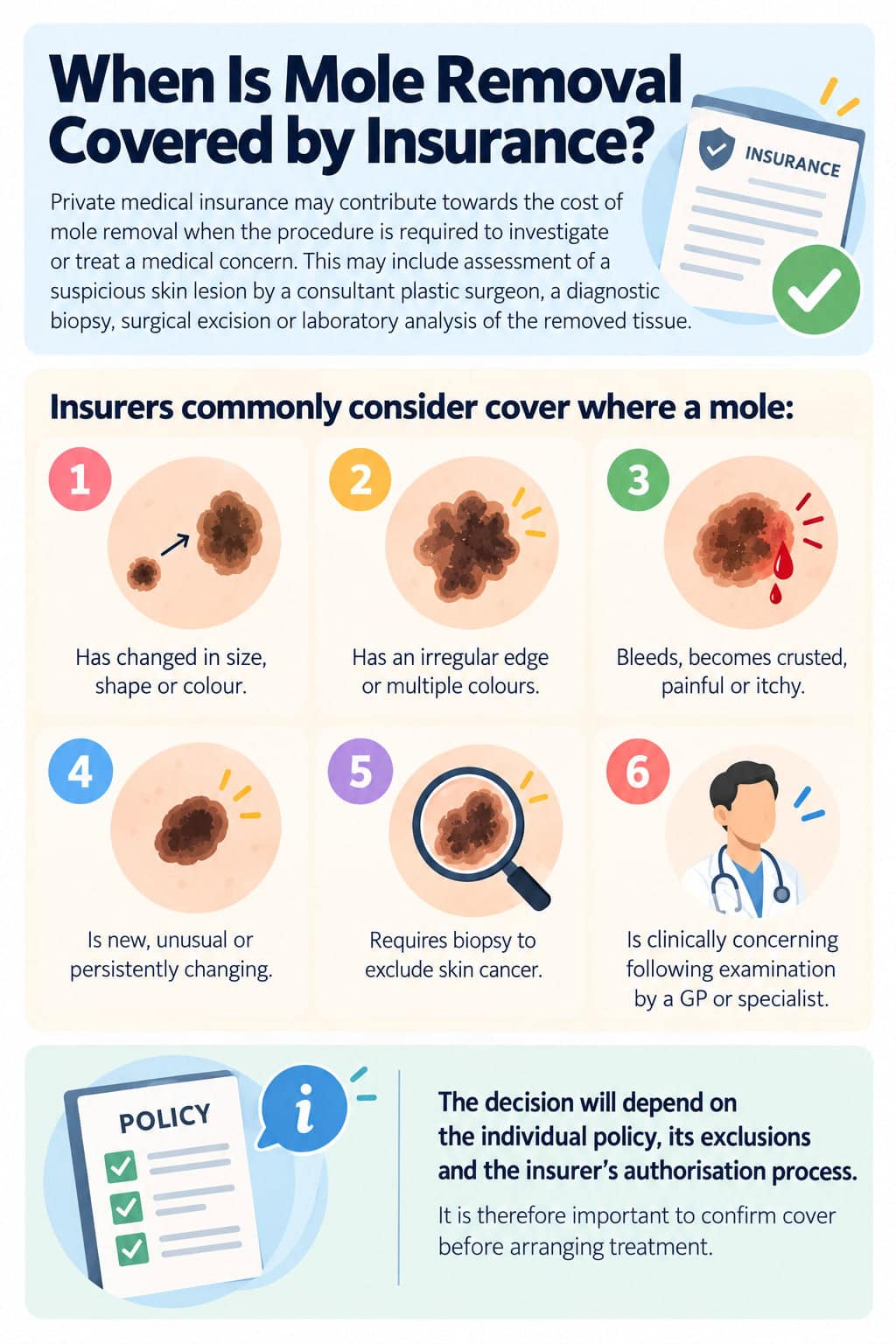
Private medical insurance may contribute towards the cost of mole removal when the procedure is required to investigate or treat a medical concern. This may include assessment of a suspicious skin lesion by a consultant plastic surgeon, a diagnostic biopsy, surgical excision or laboratory analysis of the removed tissue.
Insurers commonly consider coverage where a mole:
- Has changed in size, shape or colour
- Has an irregular edge or multiple colours
- Bleeds, becomes crusted, painful or itchy
- Is new, unusual or persistently changing
- Requires biopsy to exclude skin cancer
- Is clinically concerning following examination by a GP or specialist
The decision depends on the individual policy, its exclusions, and the insurer’s authorisation process. It is therefore important to confirm coverage before arranging treatment.
Cosmetic Mole Removal and Medical Necessity
The reason for excising a mole is central to an insurance claim.
A harmless, stable mole removed solely because a patient dislikes its appearance is usually classified as cosmetic treatment. Most private medical insurance policies exclude cosmetic procedures, even where the mole is prominent or causes personal concern.
By contrast, a mole that requires removal because it is clinically suspicious, symptomatic or difficult to diagnose may be considered medically necessary. In these circumstances, the purpose of surgery is not simply to improve appearance. It is to establish a diagnosis, exclude malignancy or treat a confirmed skin condition.
A clinical assessment is essential because it determines whether removal is appropriate and documents the medical reasoning that may be required by an insurer.
Recognising Concerning Changes in a Mole
Most moles are harmless. However, a changing or unusual mole can be a sign of skin cancer and should be assessed promptly by a qualified clinician.
The ABCDE approach can be useful for identifying features that warrant review:
- A, Asymmetry: One half does not match the other.
- B, Border: The edge is irregular, uneven or poorly defined.
- C, Colour: The mole contains different shades of brown, black, red, blue or white.
- D, Diameter: The lesion is increasing in size, particularly if larger than 6 mm.
- E, Evolving: The mole changes in appearance, becomes itchy, painful, crusted or bleeds.
These features do not confirm skin cancer, but they justify prompt professional assessment. A new or changing lesion should not be dismissed simply because it is small or painless.
Check Your Insurance Coverage and Obtain Authorisation
Before booking a consultation or procedure, contact your insurer to confirm what your policy covers.
Check whether it includes specialist consultations, dermoscopic assessment, biopsy or mole excision, histology, follow-up appointments and any applicable hospital, facility or anaesthetic fees. Ask about exclusions, including pre-existing lesions, cosmetic procedures, treatment arranged without prior approval and limitations on outpatient cover.
Some insurers require a GP referral before authorising a specialist consultation, while others permit direct access. A referral can document the mole’s location, duration, changes, symptoms and relevant medical history.
Request pre-authorisation before proceeding with treatment, and confirm whether separate approval is needed for surgery, biopsy and histology. Obtain an authorisation reference and clarify any excess, co-payment or consultant fee shortfall.
Why Biopsy and Histology May Be Necessary
Some moles can be monitored following clinical assessment, while others require biopsy or complete excision to establish a diagnosis. Histology involves examining the removed tissue under a microscope to determine whether the lesion is benign, dysplastic or cancerous. Where melanoma or another skin cancer is suspected, removal may serve both diagnostic and therapeutic purposes.
If a mole is changing, bleeding, itchy, crusted or otherwise unusual, seek timely clinical assessment rather than delaying care while waiting for insurance authorisation. Early diagnosis is important for effective skin cancer treatment.
Mole Assessment and Removal With Mr Jonathan Dunne
Mr Jonathan Dunne is a consultant plastic surgeon in London with specialist expertise and training in skin cancer surgery, Mohs surgery and facial reconstruction. His approach to mole assessment considers the lesion’s clinical features, the patient’s skin history and the most appropriate method of treatment.
Where removal is indicated, careful surgical planning is particularly important in visible or anatomically complex areas such as the face, scalp and neck. The objective is to achieve appropriate lesion removal while giving careful attention to wound closure, function and scar quality.
Following consultation, Mr Dunne can provide clear clinical documentation outlining the findings and recommended treatment. This may assist patients when communicating with their insurer. However, the insurance provider makes the final decision on funding, subject to the terms of the individual policy.
Arrange an Assessment
Private medical insurance may cover the removal of a mole where there is a genuine clinical indication, but cosmetic removal is commonly excluded. The most effective first step is a prompt assessment of any mole that is new, changing, or symptomatic including an assessment with dermoscopy.
If you are concerned about a mole or other skin lesion, a consultation with Mr Jonathan Dunne can determine whether monitoring, biopsy, or surgical removal is appropriate and provide a clear treatment plan to discuss with your insurer.


