

How Much Does Cyst Removal Cost?
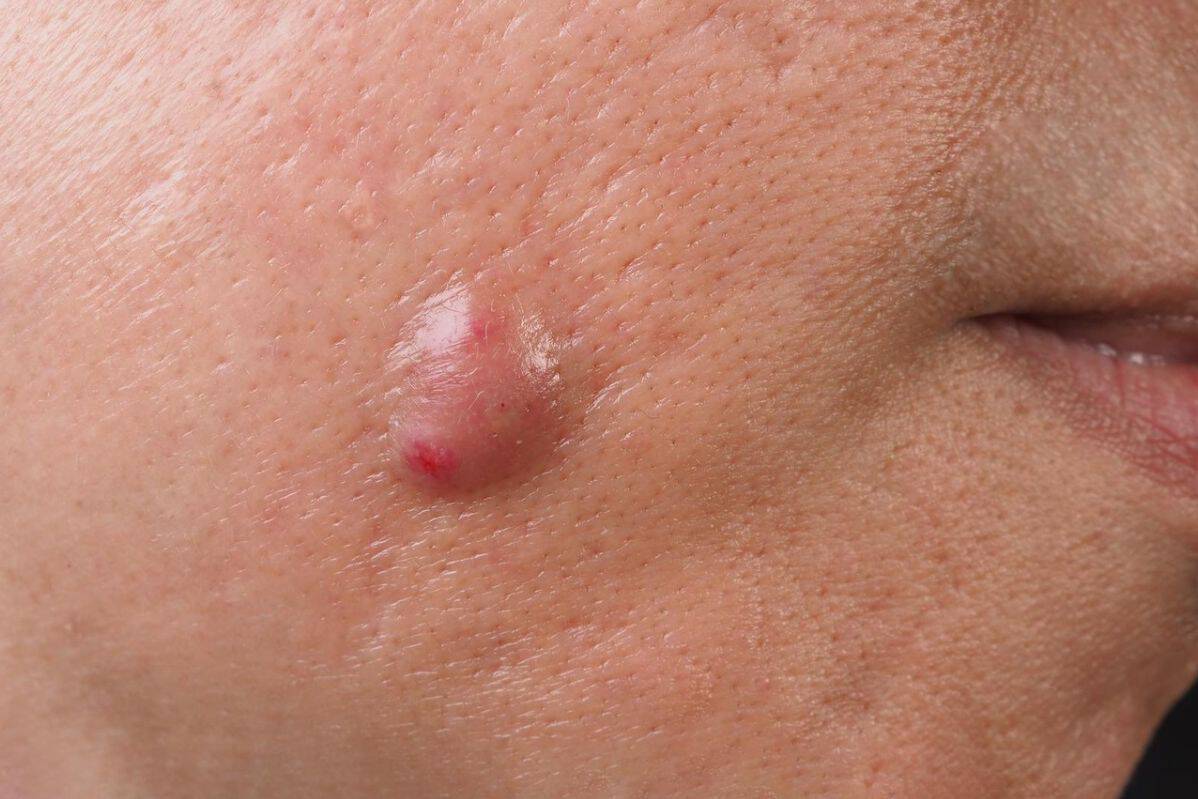
Cyst removal is a minor surgical procedure used to remove lumps that develop beneath the skin. Although many skin cysts are harmless, some become uncomfortable, inflamed or increasingly noticeable.
For patients considering private treatment, understanding the cost is an important part of planning. Prices can vary depending on the cyst’s size, location, complexity and the care required. Knowing what influences these costs can help patients make informed decisions about treatment.
Key Takeaways
Cyst removal costs in the UK vary, with the final price depending on the size, location, and complexity of the cyst.
- Most straightforward skin cyst removals can be performed under local anaesthesia.
- Consultation fees, surgical treatment, laboratory testing and aftercare may contribute to the total cost.
- Removing the entire cyst capsule reduces the likelihood of recurrence, although it does not eliminate the risk completely.
- Not all cysts require removal, particularly when they are small, painless, and show no concerning changes.
How Much Does Private Cyst Removal Cost in the UK?
The cost of private cyst removal in the UK varies between clinics and depends on the nature and complexity of the procedure, and the experience of the surgeon and their ability to produce minimal scarring. Prices can range from approximately £300 to £1,300, although this is a general estimate, and more complex cases may cost more. Some clinics may add consultation and pathology costs in addition to the advertised online price.
Small, uncomplicated cysts may be relatively straightforward to remove, while larger or more difficult cysts may require additional surgical planning, which can influence the overall cost.
For patients considering sebaceous cyst removal, the procedure commonly involves making a small incision under local anaesthesia and carefully removing the cyst and its surrounding capsule.
Cysts on the face, scalp or other sensitive areas may require particular attention to incision placement and wound closure. Previous inflammation, infection or surgery can also make removal more complex.
There is no single price that applies to every cyst removal procedure. A consultation helps determine the cyst type, the appropriate treatment, and whether additional services are needed.
Patients should request a detailed quotation that explains what is included in the proposed treatment before proceeding.
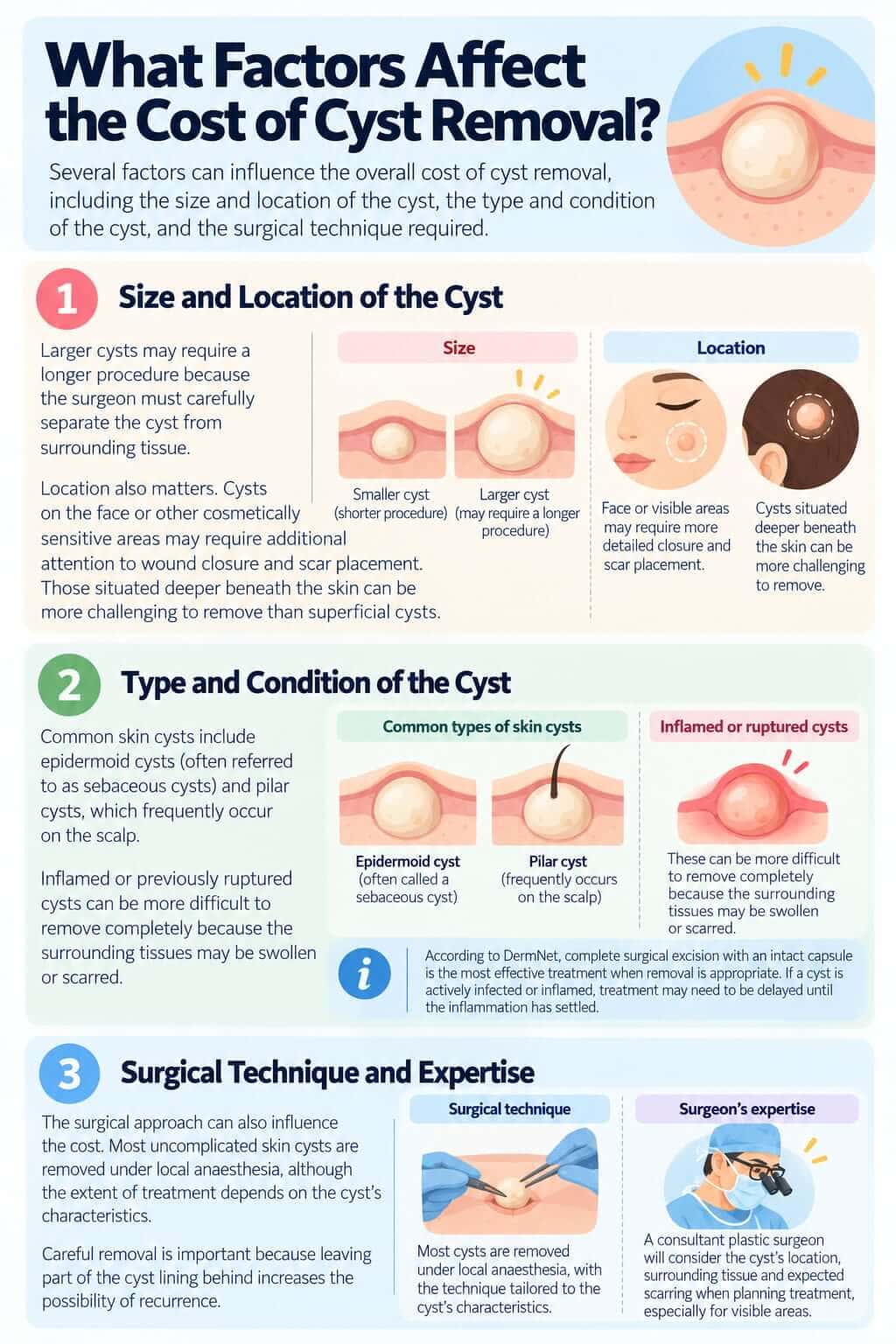
What Factors Affect the Cost of Cyst Removal?
Size and Location of the Cyst
Larger cysts may require a longer procedure because the surgeon must carefully separate the cyst from surrounding tissue.
Location also matters. Cysts on the face or other cosmetically sensitive areas may require additional attention to wound closure and scar placement for the best cosmetic result. Those situated deeper beneath the skin can be more challenging to remove than superficial cysts.
Type and Condition of the Cyst
Common skin cysts include epidermoid cysts, often referred to as sebaceous cysts, and pilar cysts, which frequently occur on the scalp.
Inflamed or previously ruptured cysts can be more difficult to remove completely because the surrounding tissues may be swollen or scarred.
According to DermNet’s guidance on epidermoid cysts, complete surgical excision with an intact capsule is the most effective treatment when removal is appropriate. If a cyst is actively infected or inflamed, treatment may need to be delayed until the inflammation has settled, and incision and drainage to resolve any infection may happen first.
Surgical Technique and Expertise
The surgical approach can also influence the cost. Most uncomplicated skin cysts are removed under local anaesthesia, although the extent of treatment depends on the cyst’s characteristics.
Careful removal is important because leaving part of the cyst lining behind increases the possibility of recurrence.
As a consultant plastic surgeon specialising in skin surgery and facial reconstruction, Mr Jonathan Dunne considers the cyst’s location, surrounding tissue and expected scarring when planning treatment. This is particularly relevant for visible areas where both complete removal and wound healing are important, and producing a barely visible scar is at the heart of the procedure.
What Is Usually Included in the Cost of Cyst Removal?
Private cyst removal fees may cover different stages of care, and patients should confirm what is included in the quotation.
Common components include:
- Initial consultation: Assessment of the lump, medical history and treatment options.
- Surgical removal: The procedure to remove the cyst and its capsule.
- Facility (hospital) costs: Use of the theatre or minor operation room
- Local anaesthesia: Medication used to numb the treatment area.
- Histology: Laboratory examination of the removed tissue, when required.
- Aftercare: Dressings, wound assessments or stitch removal where appropriate.
Some clinics provide a combined treatment fee, while others charge separately for consultations, laboratory examinations or follow-up appointments.
Histological examination may be recommended to confirm the diagnosis and exclude other conditions. This can be important when a lump has unusual features, or the diagnosis is uncertain.
Understanding the full quotation helps patients compare costs more accurately and avoid unexpected expenses.
Is Cyst Removal Available on the NHS?
Cyst removal may be available through the NHS when there is a medical reason for treatment. However, access depends on individual circumstances and local eligibility criteria.
A cyst that repeatedly becomes infected, causes significant pain or raises concerns about its diagnosis may require medical assessment and possible treatment.
In contrast, small, uncomplicated cysts that cause no symptoms do not always need removal. Patients seeking treatment primarily because of appearance may find that NHS-funded removal is not routinely available.
Private treatment may offer an alternative for patients who wish to have a benign cyst removed, subject to clinical suitability.
Before choosing surgery, patients should have the lump examined to confirm whether it is likely to be a cyst or whether further investigation is necessary.
Are There Additional Costs After Cyst Removal?
Most straightforward cyst removals are performed as outpatient procedures, allowing patients to return home shortly afterwards. However, recovery can involve expenses beyond the initial surgical fee.
Mild swelling, bruising and tenderness may occur around the treatment site. The wound may require a dressing, and stitches may need to be removed at a follow-up appointment.
Patients may also need to limit strenuous exercise or activities that place tension on the wound during the early healing period.
Scarring is expected after surgical cyst removal, although it can gradually improve over time. The final scar depends on factors such as wound location, skin characteristics and individual healing.
Other potential complications include bleeding, infection, wound healing problems and recurrence. If these occur, additional treatment may be necessary.
Patients should clarify whether routine follow-up care and treatment for complications are included in the original quotation.
Is It Worth Paying for Private Cyst Removal?
Whether private cyst removal is worthwhile depends on the cyst’s symptoms, location, and impact, and wanting to have a specific surgeon perform the procedure.
Some patients seek treatment because a cyst becomes painful, repeatedly inflamed or catches on clothing. Others may be concerned about a visible lump on the face or scalp.
However, removing a cyst is not always necessary. Many remain harmless and cause little discomfort, making observation a reasonable option when the diagnosis is clear.
Patients should also understand the difference between draining a cyst and removing it completely. Drainage may relieve discomfort in certain circumstances, but it does not necessarily remove the cyst lining. As a result, the lump may return.
Surgical removal aims to remove the capsule as well as its contents, reducing the possibility of recurrence. Nevertheless, no procedure can guarantee that a cyst will never develop again, although the risk is very low.
A clinical assessment can help determine whether removal offers a meaningful benefit compared with continued observation.
Making an Informed Decision About Cyst Removal
Understanding cyst removal costs involves more than comparing treatment fees. Patients should know what the procedure includes, the experience of who is performing it, why removal may be recommended and what to expect during recovery. A clear diagnosis is also important, as not every lump beneath the skin is a cyst.
Before proceeding, patients may find it helpful to ask about the proposed surgical technique, potential scarring, whether tissue examination is required and any additional costs. These details can help them decide whether treatment is appropriate for their circumstances.
Mr Jonathan Dunne provides specialist assessment and surgical treatment for skin cysts at his London practice. His approach considers the cyst’s nature, location, and surrounding tissues when deciding how to remove it. With a clearer understanding of the procedure and likely costs, patients can make informed decisions about their care without feeling pressured into unnecessary treatment.


