

How Much Does a Blepharoplasty Usually Cost?
Blepharoplasty, commonly known as eyelid surgery, is a procedure that removes skin and repositions fat around the eyes. It can address drooping upper eyelids, under-eye bags and changes associated with ageing. It is often performed with a brow lift and facelift.
For patients considering surgery, understanding the cost is an important part of planning. Prices vary depending on the type of blepharoplasty, the complexity of the procedure and the care required before and after treatment.
Key Takeaways
Upper blepharoplasty with Mr Jonathan Dunne starts from £3,800, while lower eyelid surgery is priced following consultation.
- The cost depends on the type of surgery, the surgeon’s expertise, anaesthesia and surgical facilities.
- Lower blepharoplasty may involve additional techniques, such as fat repositioning and eyelid support.
- Patients should confirm whether consultations, aftercare and other expenses are included in their quotation.
- Surgical qualifications, patient safety, and realistic expectations matter as much as the procedure’s cost.
How Much Does Blepharoplasty Cost in the UK?
The cost of blepharoplasty in the UK varies by surgeon and clinic. No single price applies to every patient, as the procedure can involve different surgical techniques and treatment requirements.
For patients considering upper blepharoplasty, Mr Jonathan Dunne’s London practice lists a starting price of £3,800. Lower blepharoplasty is priced following consultation, allowing the surgical approach and individual requirements to be assessed before a quotation is provided.
Upper eyelid surgery primarily addresses excess skin and, where necessary, underlying deep fat pads. It can reduce the appearance of heavy or hooded eyelids and may improve peripheral vision when overhanging skin causes obstruction.
Lower blepharoplasty addresses concerns such as under-eye bags, loose skin and changes in the contour between the eyelid and cheek. The procedure may require more extensive adjustments to the underlying tissues.
Patients considering surgery on both upper and lower eyelids should expect a different quotation from those undergoing a single procedure.
What Factors Affect the Cost of Blepharoplasty?
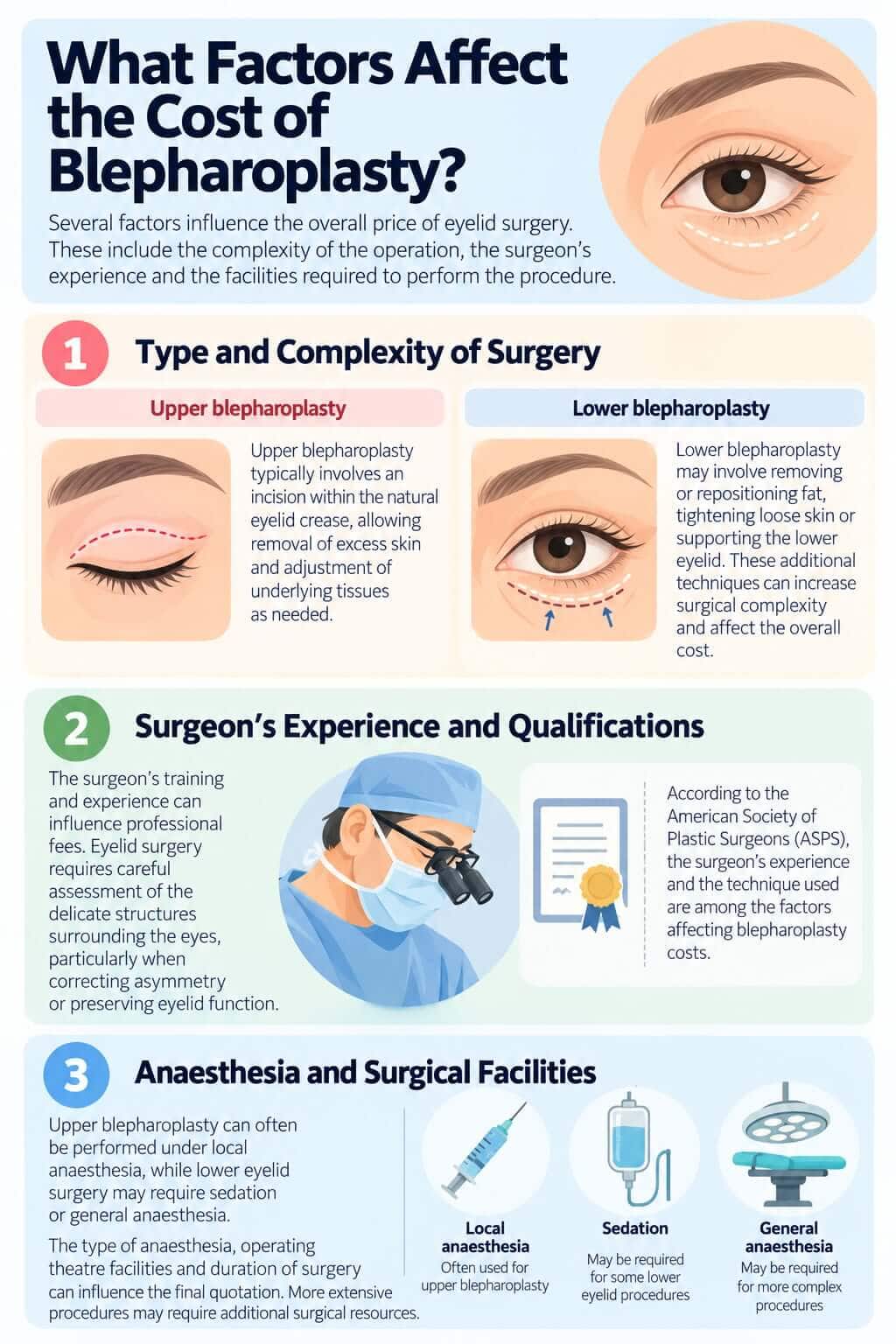
Several factors influence the overall price of eyelid surgery. These include the complexity of the operation, the surgeon’s experience and the facilities required to perform the procedure.
Type and Complexity of Surgery
Upper blepharoplasty typically involves an incision within the natural eyelid crease, allowing removal of excess skin and adjustment of underlying tissues as needed.
Lower blepharoplasty may involve removing or repositioning fat, tightening loose skin or supporting the lower eyelid. These additional techniques can increase surgical complexity and affect the overall cost.
Surgeon’s Experience and Qualifications
The surgeon’s training and experience can influence professional fees. Eyelid surgery requires careful assessment of the delicate structures surrounding the eyes, particularly when correcting asymmetry or preserving eyelid function.
According to the American Society of Plastic Surgeons (ASPS), the surgeon’s experience and the technique used are among the factors affecting blepharoplasty costs.
Anaesthesia and Surgical Facilities
Upper blepharoplasty can often be performed under local anaesthesia, while lower eyelid surgery may require sedation or general anaesthesia.
The type of anaesthesia, operating theatre facilities and duration of surgery can influence the final quotation. More extensive procedures may require additional surgical resources.
What Is Usually Included in the Price of Eyelid Surgery?
A blepharoplasty quotation may cover several aspects of treatment, although the exact inclusions differ between providers.
Common components include:
- Surgeon’s fee: The professional cost of performing the operation.
- Hospital or clinic fees: Charges associated with surgical facilities and equipment.
- Anaesthesia: Fees for anaesthetic medication and specialist care where required.
- Preoperative assessment: Consultations or investigations needed before treatment.
- Postoperative care: Follow-up appointments to assess healing and recovery.
The ASPS also identifies prescription medication and medical tests as potential costs associated with eyelid surgery.
Not every clinic includes these services in its advertised price. Patients should request a written quotation and clarify whether additional appointments, medications or treatment for complications could involve separate charges.
Is Upper or Lower Blepharoplasty More Expensive?
Lower blepharoplasty can cost more than upper eyelid surgery because the procedure may involve additional surgical techniques. However, this is not always the case, and the final price depends on individual requirements.
Upper eyelid surgery generally focuses on removing excess skin and adjusting underlying fat where appropriate. Lower eyelid surgery may require more extensive fat repositioning, skin adjustment and support of the surrounding tissues.
For patients with relatively minor lower eyelid skin laxity, lower eyelid pinch surgery may be considered. This technique removes a small amount of excess skin but does not address every cause of under-eye bags or puffiness.
A surgical assessment helps determine which procedure is appropriate. The complexity of the operation, rather than the eyelid area alone, is an important consideration when estimating costs and may include incisions on the inside of the eyelid (trans-conjunctival lower blepharoplasty) and reposition deeper fat..
Does Blepharoplasty Require Additional Recovery Expenses?
Blepharoplasty is commonly performed as a day-case procedure, meaning patients can usually return home on the same day. However, recovery may involve additional practical expenses.
Swelling, bruising, temporary irritation and discomfort are common during the initial healing period. According to the ASPS, many patients feel comfortable returning to public activities within approximately 10 to 14 days, although healing continues beyond this period.
Patients may need to arrange transport after surgery, take time away from work or organise assistance with daily activities.
Understanding what to expect after blepharoplasty can help patients plan for early swelling, follow-up appointments and temporary activity restrictions.
Although complications are not inevitable, eyelid surgery carries risks, including bleeding, infection, dry eyes, changes in eyelid position and difficulty closing the eyes. Rarely, serious visual complications can occur. Additional treatment or revision surgery may involve further expenses.
How Can Patients Assess Whether Blepharoplasty Is Worth the Cost?
The value of blepharoplasty depends on more than the quoted price. Patients should consider the procedure’s suitability, the surgeon’s qualifications, expected recovery, and potential risks.
For some individuals, excess upper eyelid skin may affect their field of vision. Others may seek surgery primarily to address changes in appearance. The potential benefits therefore depend on the patient’s anatomy and reasons for considering treatment.
A consultation provides an opportunity to assess eyelid structure, discuss the available techniques and establish realistic expectations. Patients should also understand that surgery cannot stop the natural ageing process or guarantee a particular cosmetic outcome.
Choosing a suitably qualified surgeon and understanding the proposed treatment are important considerations before making a financial commitment.
Making an Informed Decision About Blepharoplasty
Blepharoplasty costs can vary, so having a clear understanding of the total expenses can help patients plan ahead. Beyond the initial quotation, it is worth checking what is included in the treatment fee and whether additional costs may arise. Taking time to review these details can help patients avoid unexpected expenses and feel more prepared for surgery.
There is also no need to rush the decision. Patients may benefit from taking time to consider the information provided, discuss any remaining concerns and decide whether the procedure fits their personal goals and circumstances.
Mr Jonathan Dunne is a Consultant Plastic Surgeon in London, specialising in facial aesthetic and reconstructive surgery, including blepharoplasty. He takes an individualised approach to eyelid surgery, considering each patient’s anatomy and concerns when recommending treatment. This helps patients understand their options and decide whether surgery is the right choice for them.


